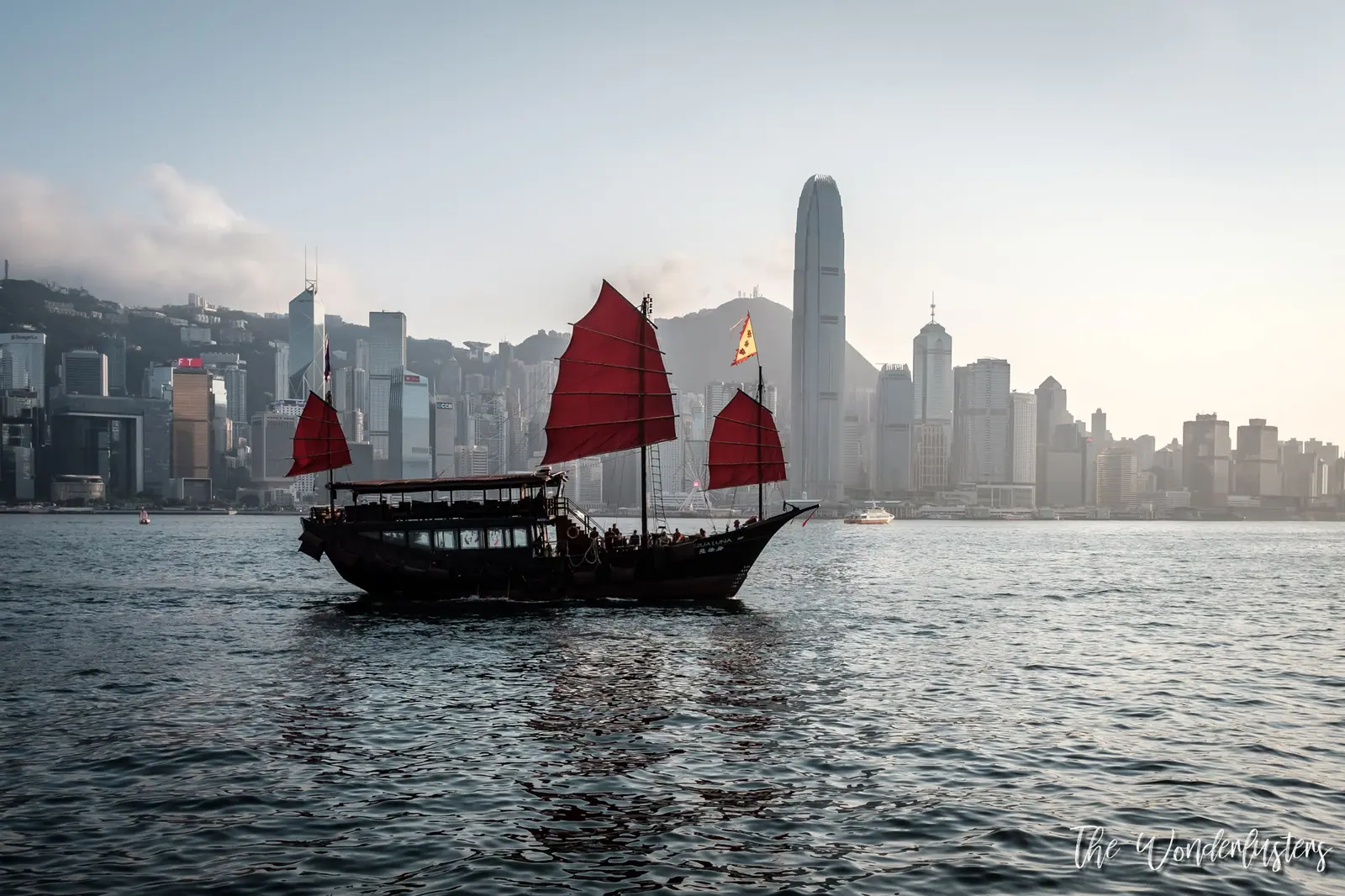
AsiaJune 20199 min read
The Best Tourist Attractions in Hong Kong and Macau
In short
We spent 11 days in Hong Kong and Macau in spring 2019: 9 in Hong Kong and 2 in Macau. Highlights included Kowloon's markets and Walled City Park, Victoria Peak, the Tian Tan Buddha on Lantau and Macau's UNESCO-listed old town. Staying mostly on hotel points, our family of four spent 9,694 HKD (about 1,236 USD at 2019 rates).
- Dates
- 2019-04-26 to 2019-05-07
- Number of days
- 11
- Cities we visited
- Hong Kong, Macau
- Inbound
- From Taiwan by plane
- Outbound
- To Malaysia by plane
- Mode of transport
- Subway, ferry, tram, city buses, taxi
- Distance travelled (excluding flights)
- 435 km
- Number of photos taken
- 4550 (414 per day)
- Currency
- The Hong Kong Dollar (1.00 USD = 7.85 HKD)
We spent 11 days in Hong Kong and Macau in spring 2019: 9 in Hong Kong and 2 in Macau. Because we paid for most of our hotel nights with points, the whole stay cost our family of four 9,694 HKD (about 1,236 USD), all expenses included. Here are the attractions we loved most, from Kowloon’s markets and Victoria Peak to Macau’s colonial old town and the casino resorts of Taipa.
In 2009, we landed in Hong Kong to begin a journey through the Celestial Empire. Jessica was pregnant with Mateo at the time, and we thought we were setting off on the last “big” trip of our lives… at least without children! We had no idea that Mateo would turn out to be an extremely easy-going baby, or that this “last big trip” would become the first of a long series. So we already knew this city of 1,500 skyscrapers, where tradition and modernity mix, and we loved it so much that coming back 10 years later as a family was a given.
Best Things to Do in Hong Kong and Macau
Kowloon
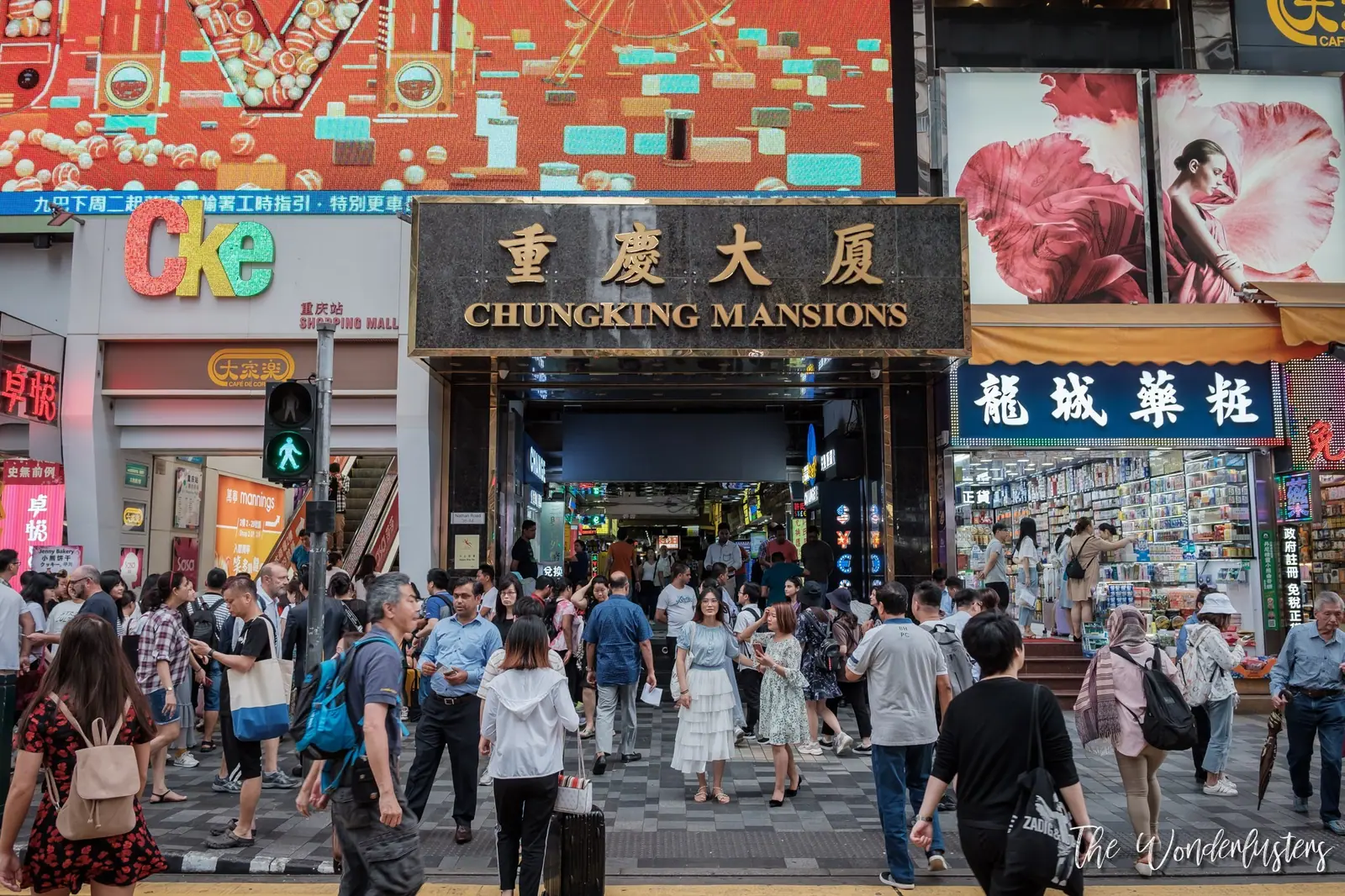
On our first visit, accommodation was already very expensive, and our budget only stretched to a backpacker hostel in the infamous Chungking Mansions in Tsim Sha Tsui, on busy Nathan Road. The building, which we were happy to show the boys (only the first floor), is known to hide drug and prostitution networks on its upper floors. It’s full of immigrants, refugees and… backpackers. It’s the only place in the city where you don’t feel like you’re in Hong Kong.
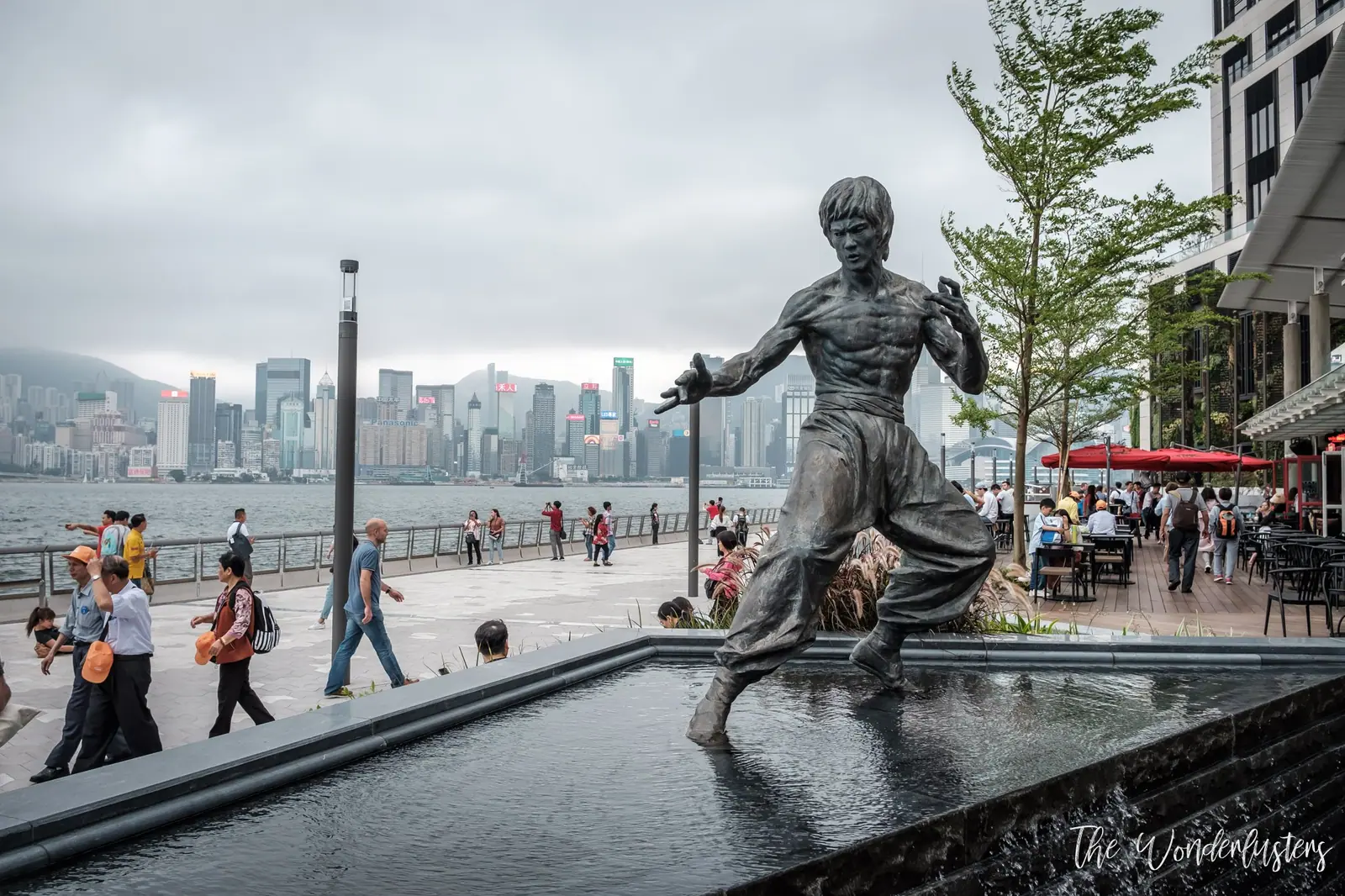
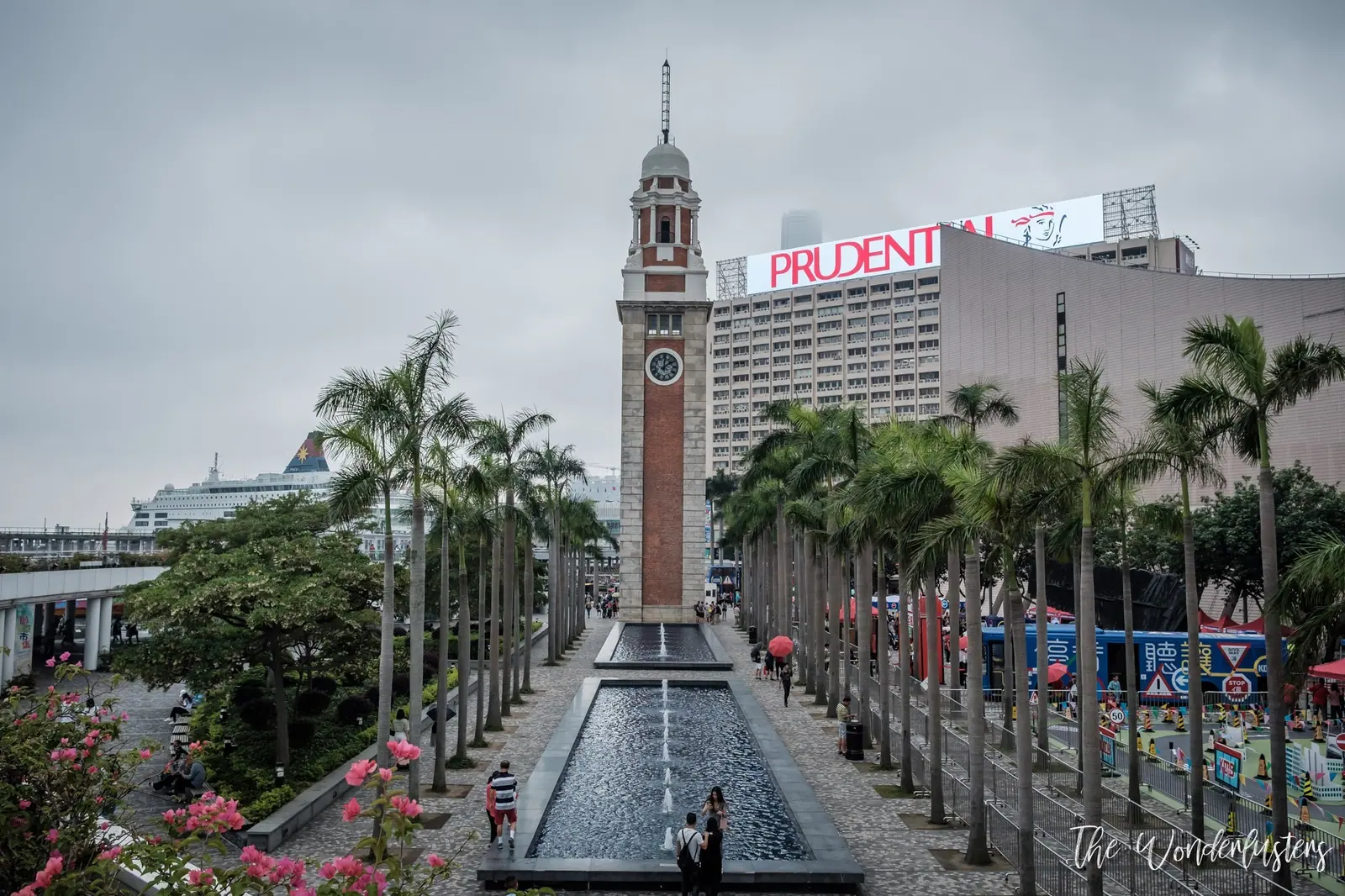
We walked along the Avenue of Stars, which honors the stars of Hong Kong’s film industry and is home to a statue of Bruce Lee. After 3 years of renovation, the promenade was brand new; we didn’t even recognize it! Across Victoria Harbour lies Hong Kong Island.
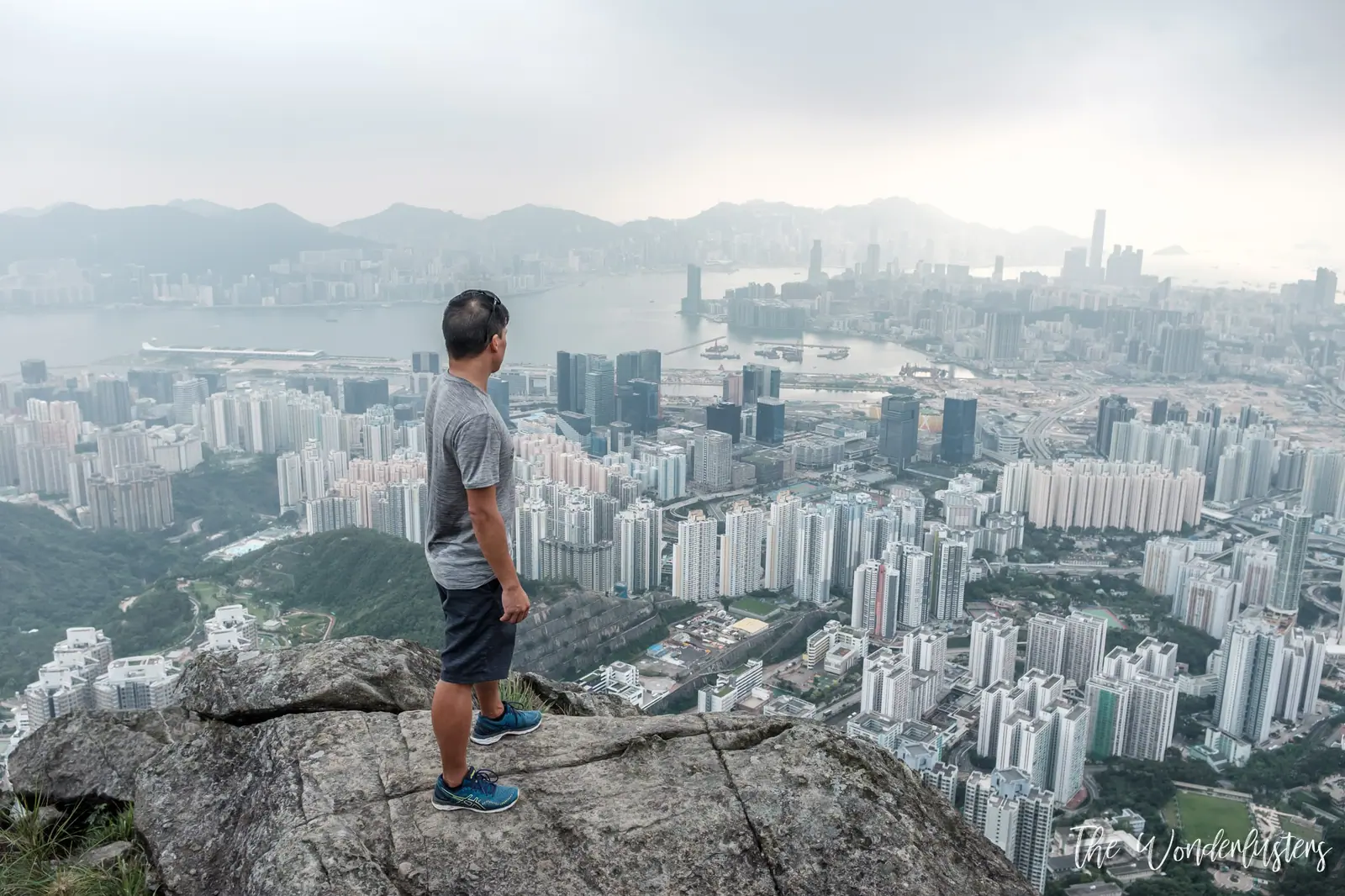
For the best view of Hong Kong, we summoned our courage and climbed the hill to Suicide Cliff. The place is well named: many people die there every year chasing the perfect selfie. Don’t worry, we were careful, took the easiest route and watched the most reckless tourists from a distance.
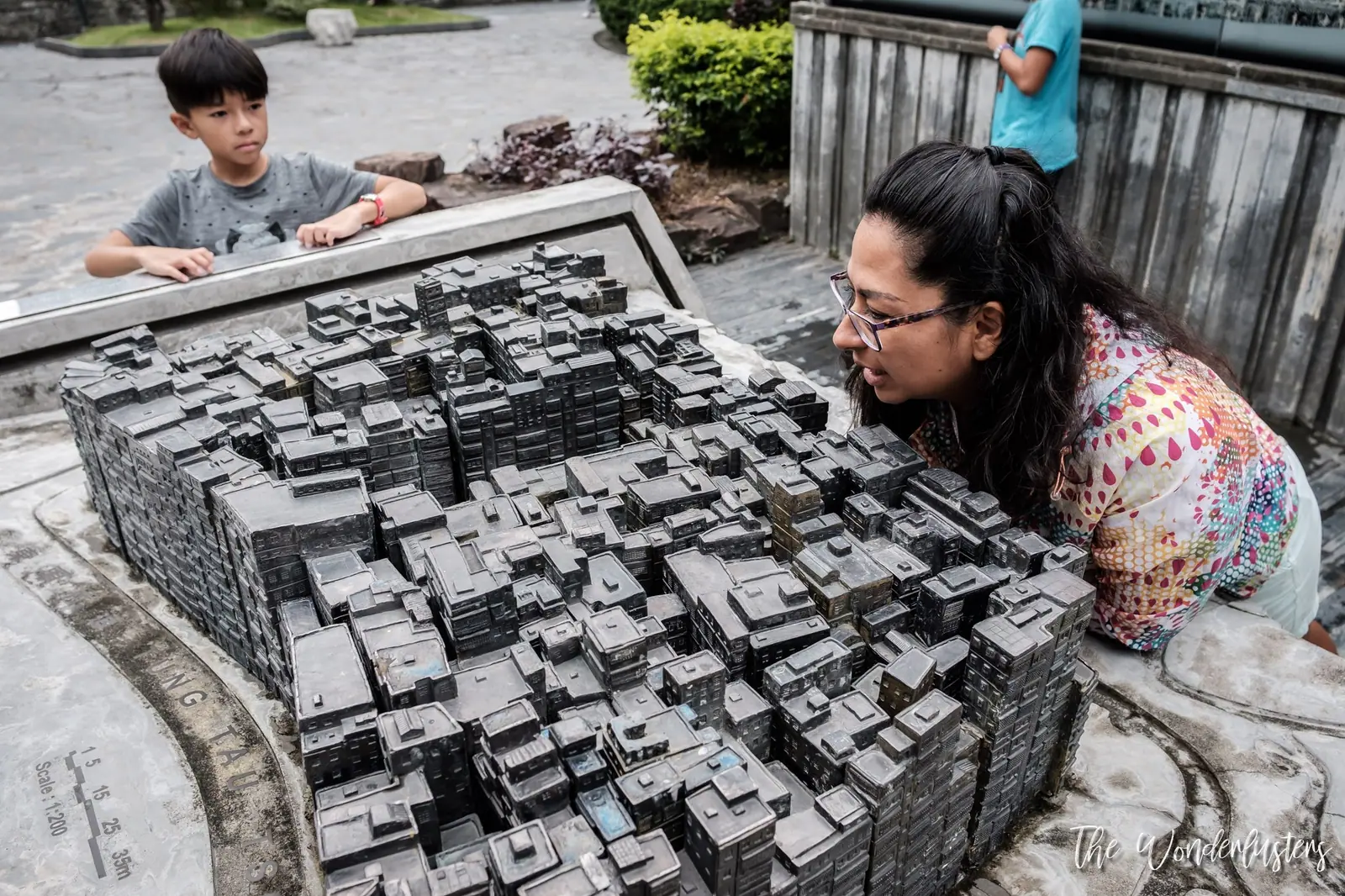
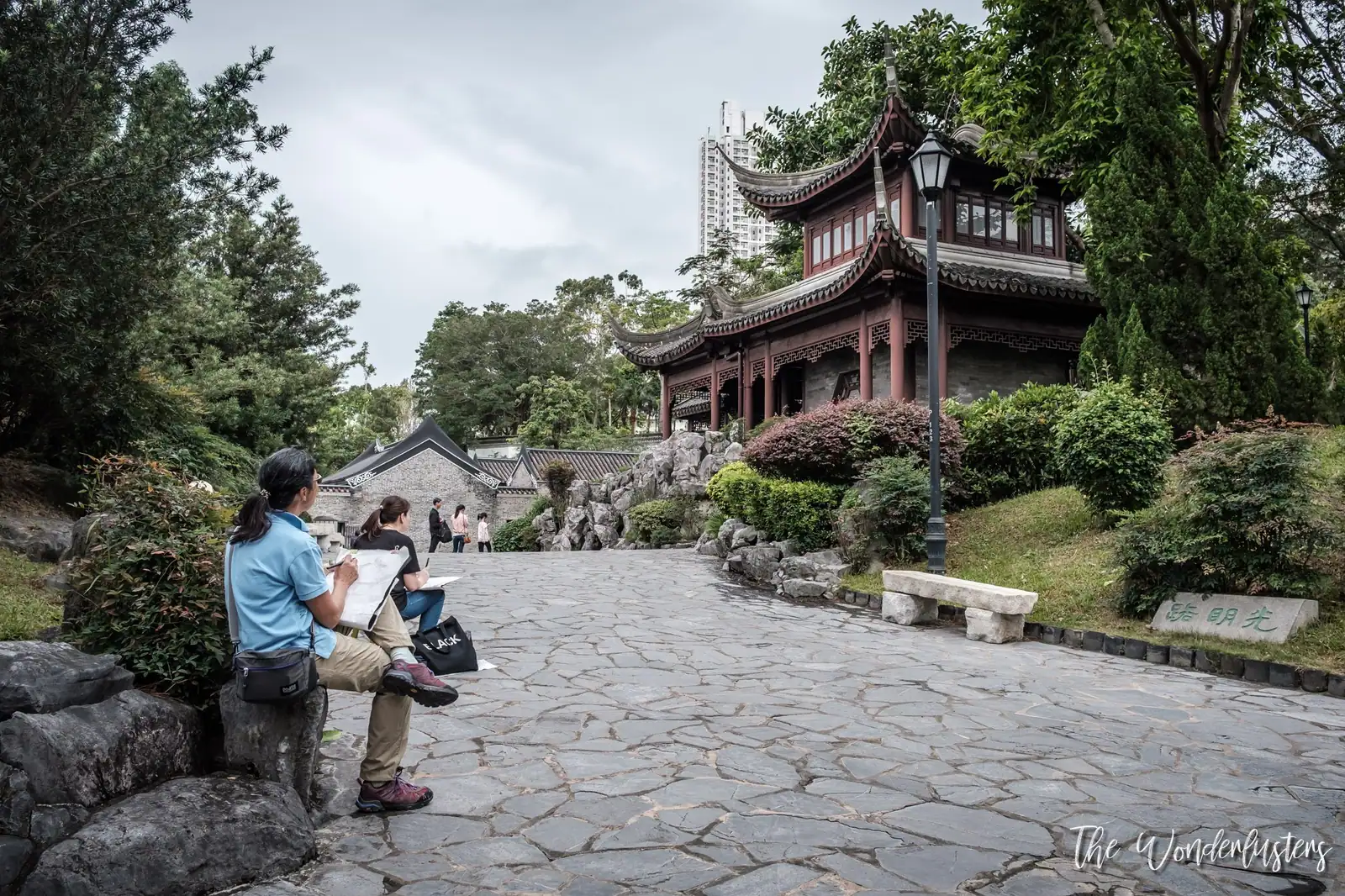
Have you ever heard of the Kowloon Walled City? Nicknamed the “City of Darkness,” it is described as one of the greatest anomalies in history. It had long captured my imagination, and we couldn’t leave Hong Kong without setting foot on what remains of it, since the site is now a beautiful park: Kowloon Walled City Park. Here is its story in brief.
For 800 years, the Chinese used the citadel as a military fortress to defend Kowloon and its coastline. During the 99 years of British rule over Hong Kong, the citadel never came under British governance and remained a Chinese enclave in the middle of Hong Kong. As property prices soared, hundreds of buildings went up within its walls to house the city’s poorest people. Meanwhile, strip clubs, casinos, drug and prostitution networks and the mafia turned it into a true city of darkness, where debauchery and crime were out of control. The authorities decided to demolish the citadel in 1987, and it was torn down in 1993–1994. At that point, an estimated 50,000 people lived within its 0.026 square kilometers (260 x 100 meters). No population in human history had ever reached such a density: 2 million inhabitants per square kilometer. Today, the lovely Kowloon Walled City Park sits on the remains of this megacity within a megacity, which had become a symbol of anarchy and human barbarity.
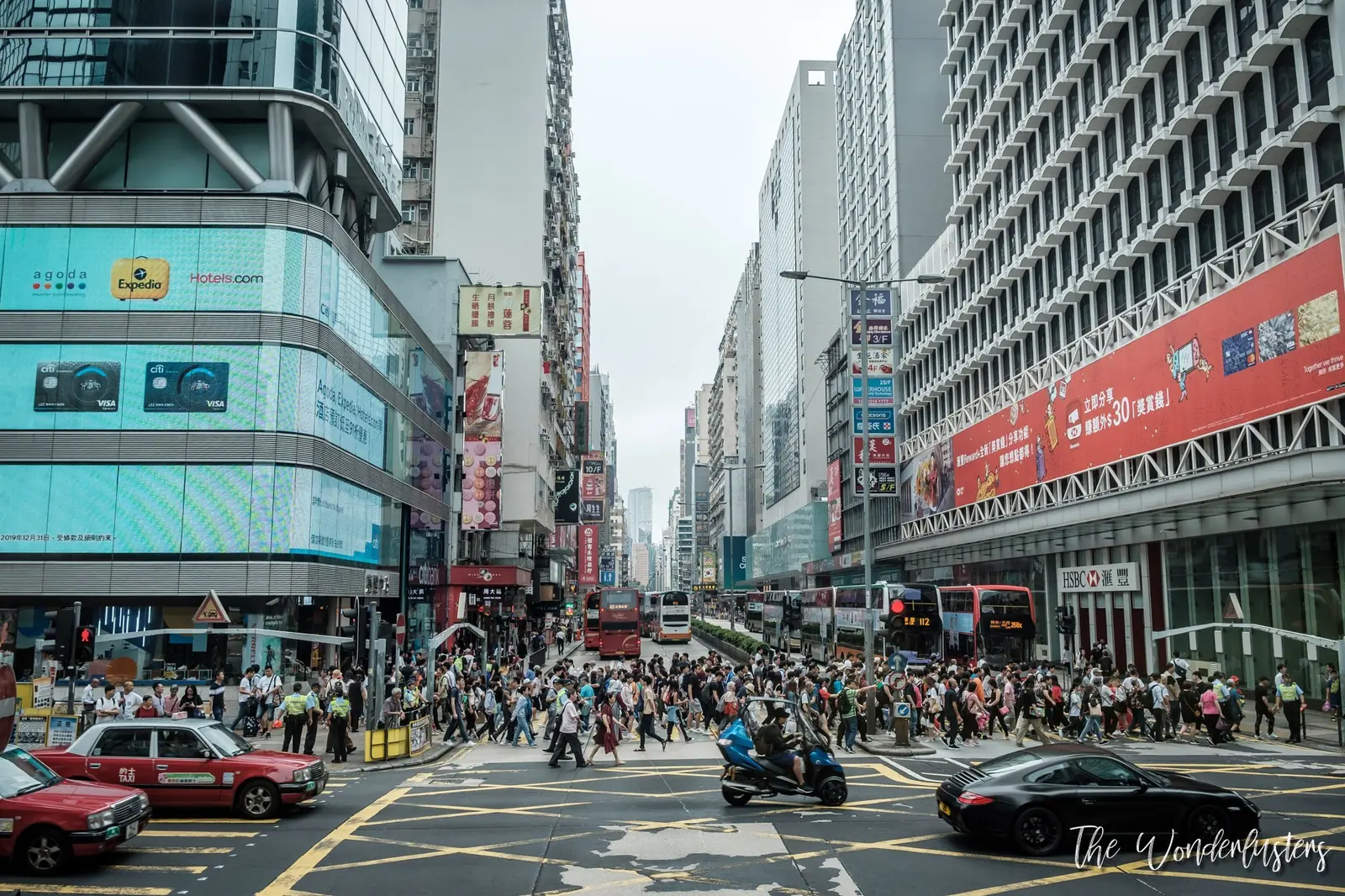
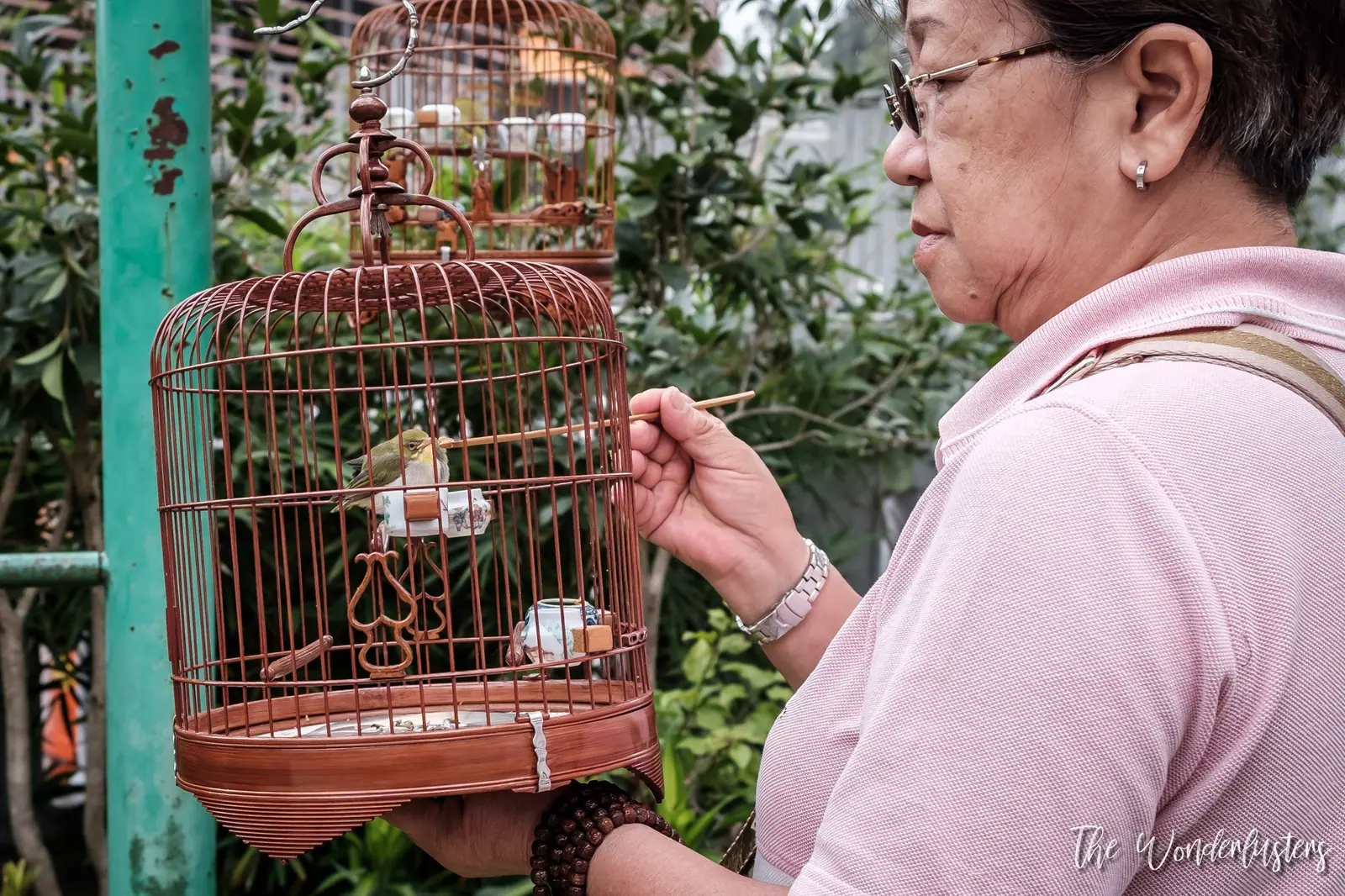
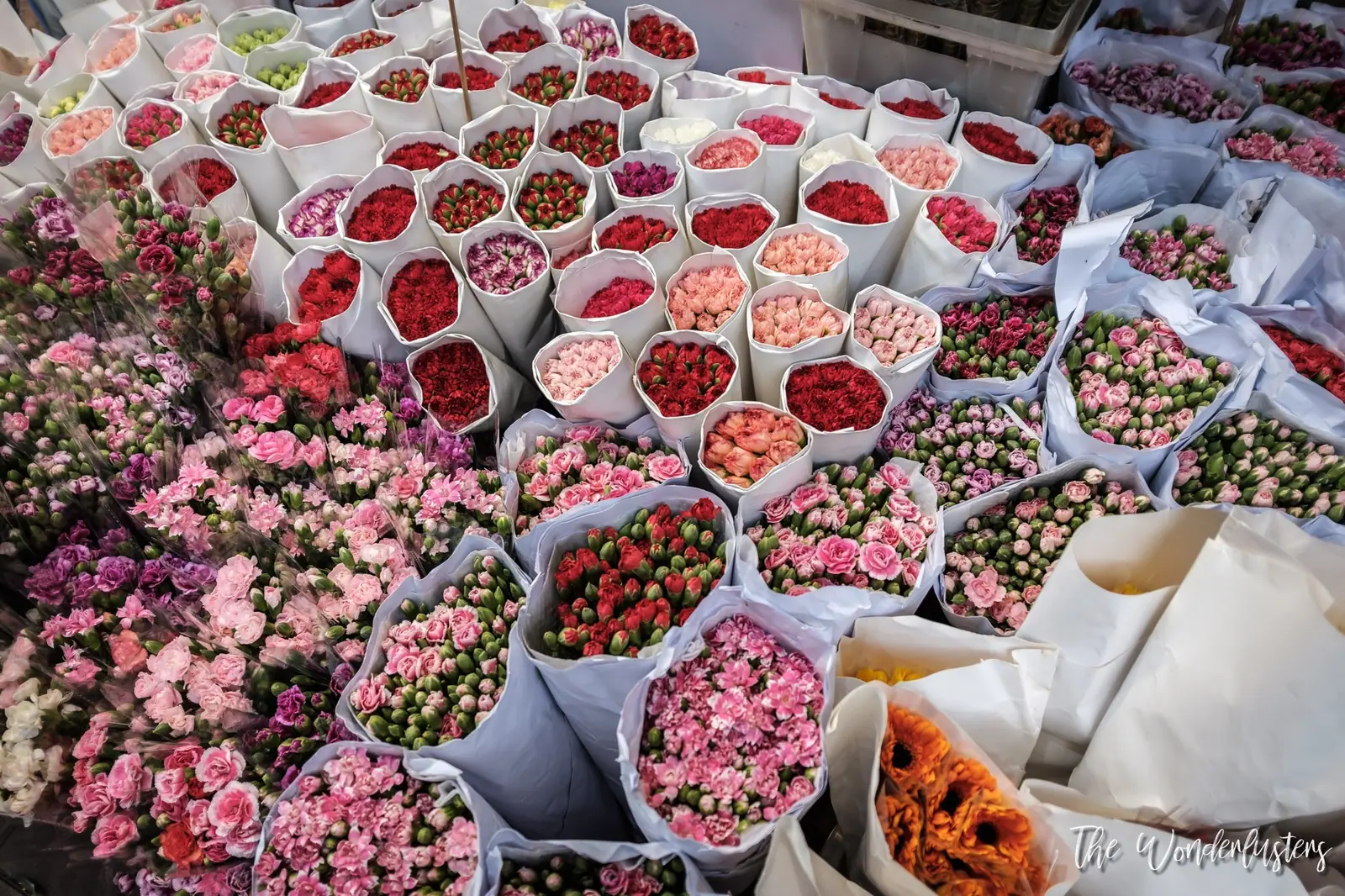
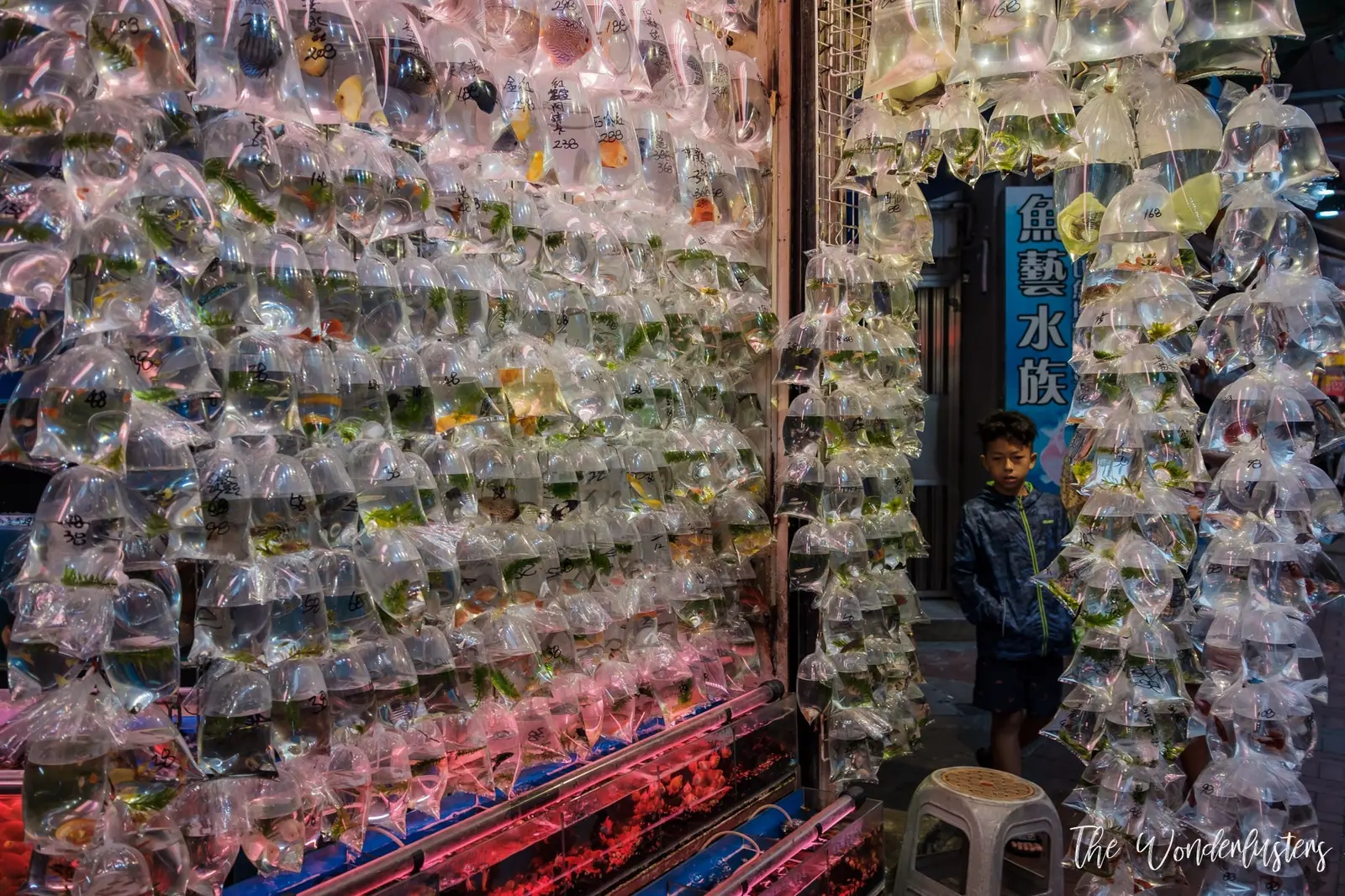
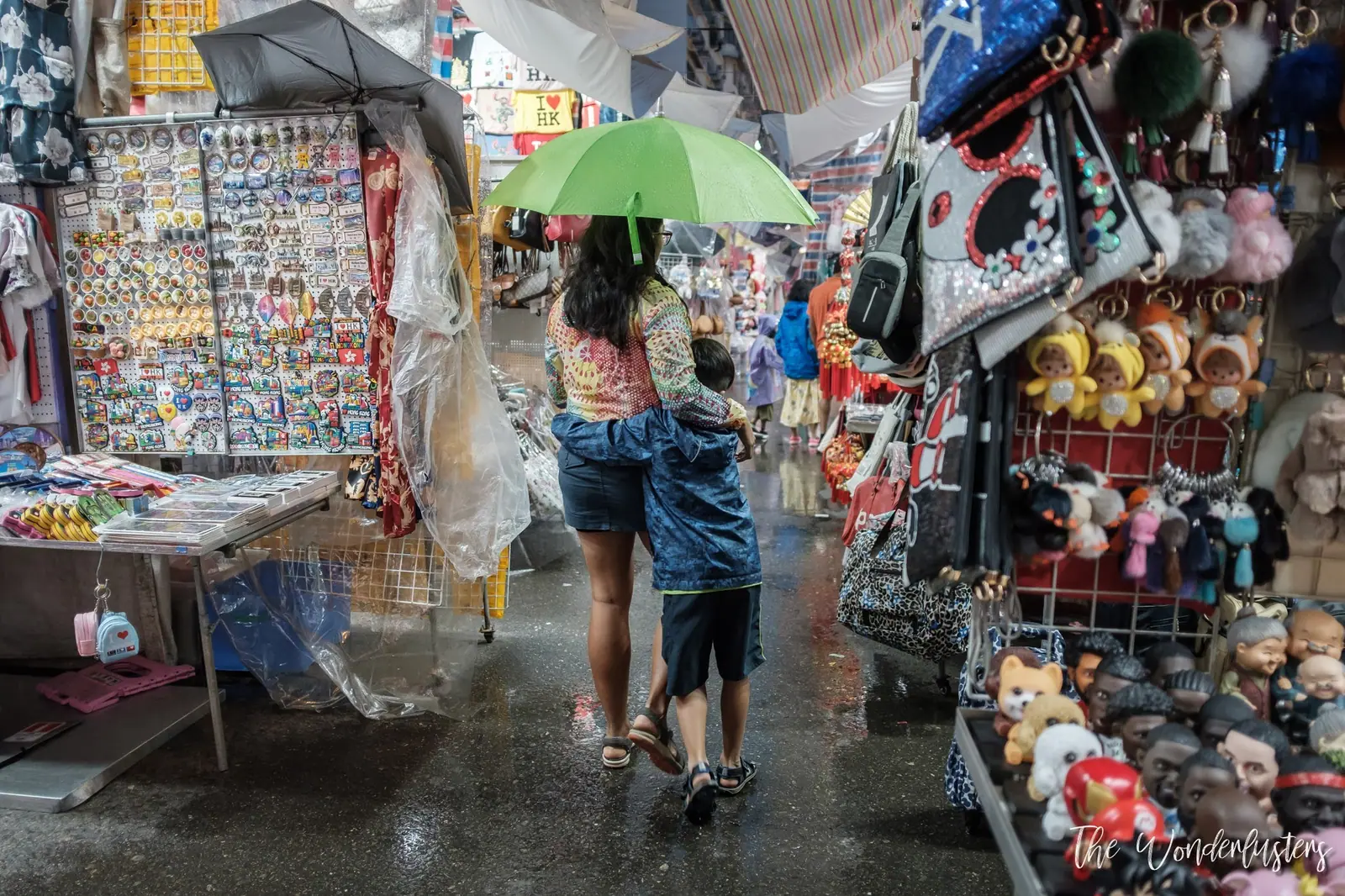
A few kilometers away, Mong Kok, with “only” 130,000 inhabitants per square kilometer, is one of the most densely populated areas on the planet. The district is organized into streets specializing in one trade: the bird market (Yuen Po Street Bird Garden), the flower market, the goldfish market, the electronics market and the women’s clothing market (Ladies’ Market). Wandering these streets packed with every kind of shop was a rich experience.
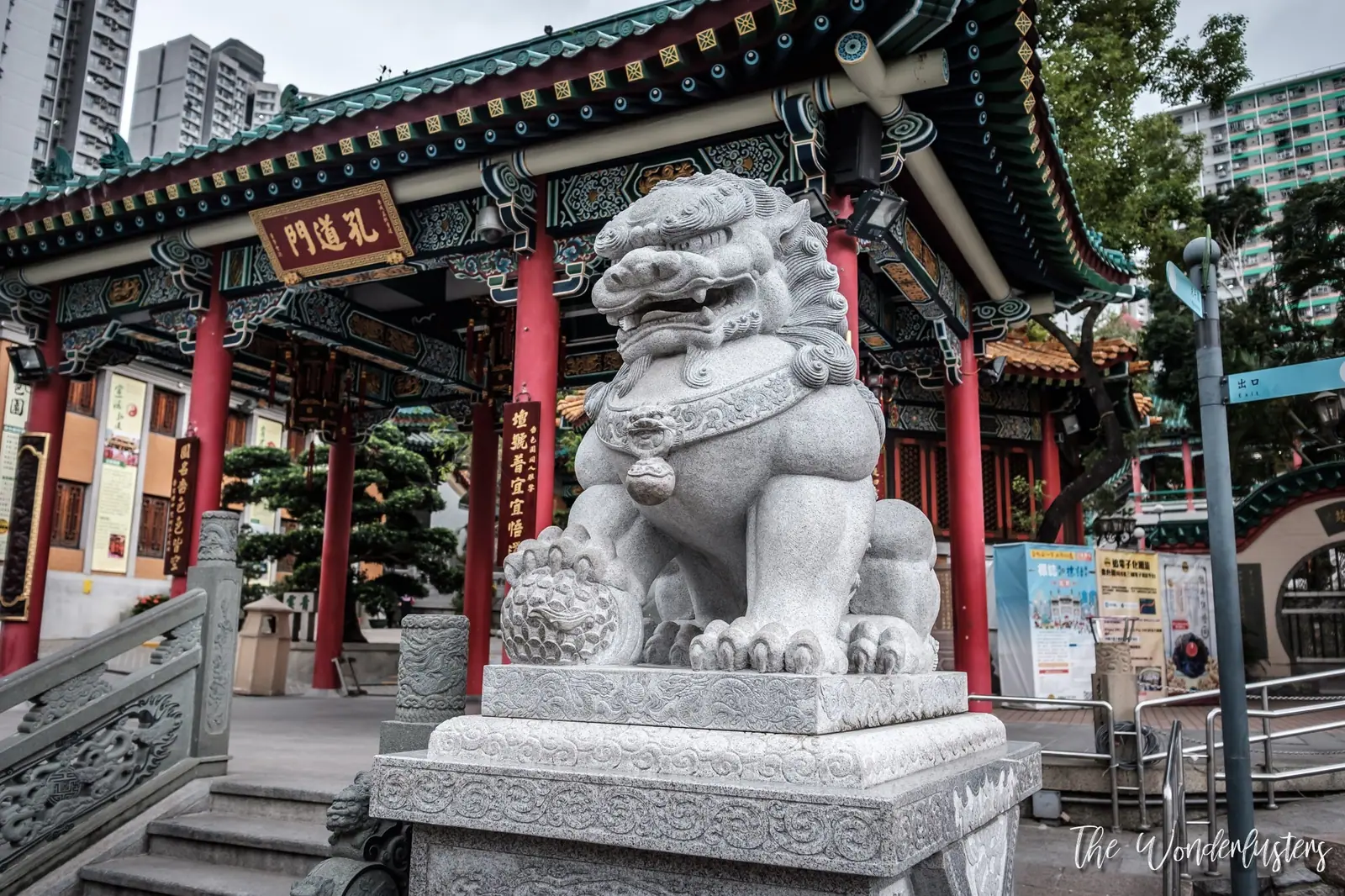
Hong Kong Island
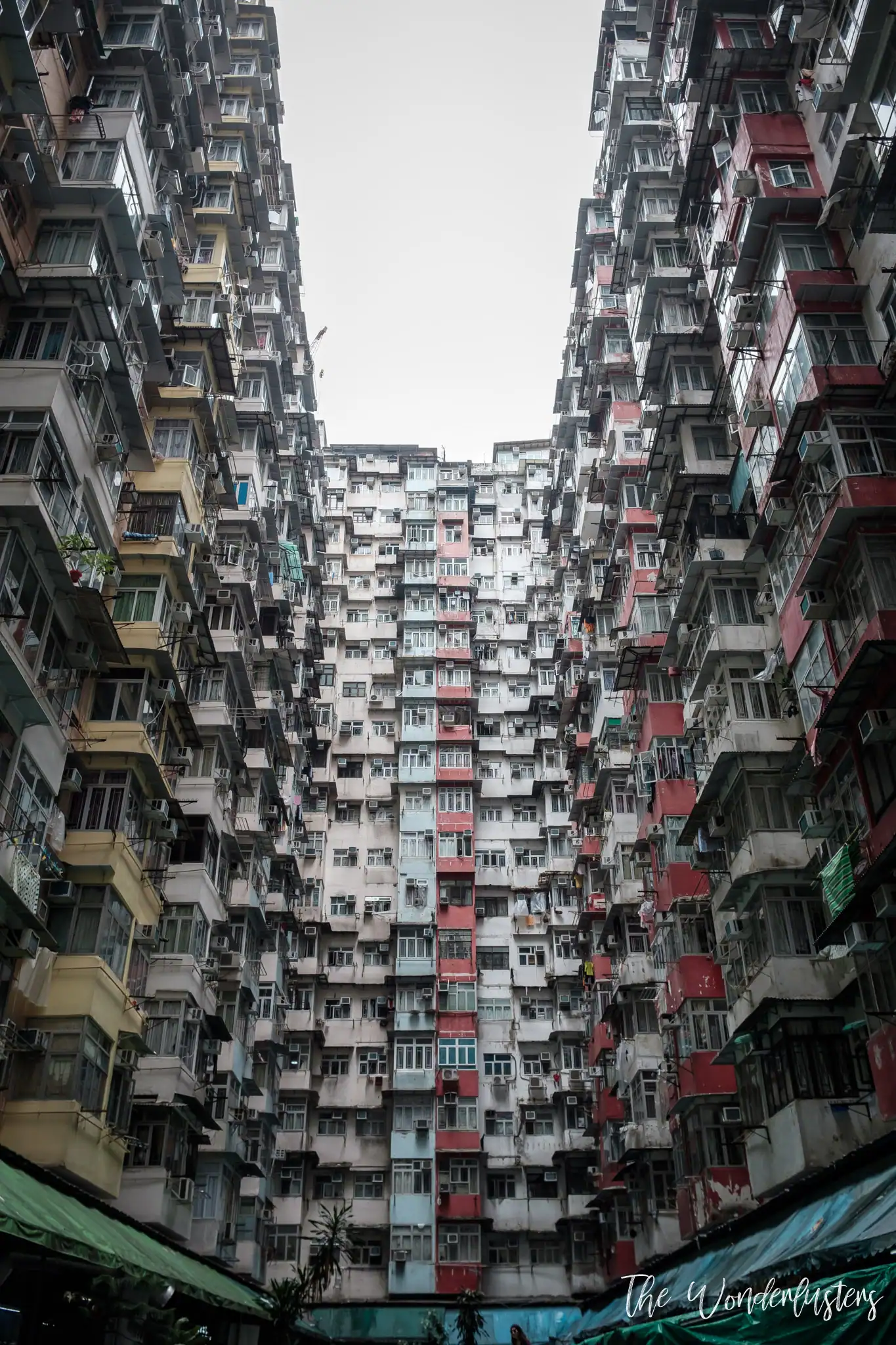
Across the harbor, the Yick Cheong Building, better known as the Monster Building, became iconic thanks to the movie Transformers (and Instagram).
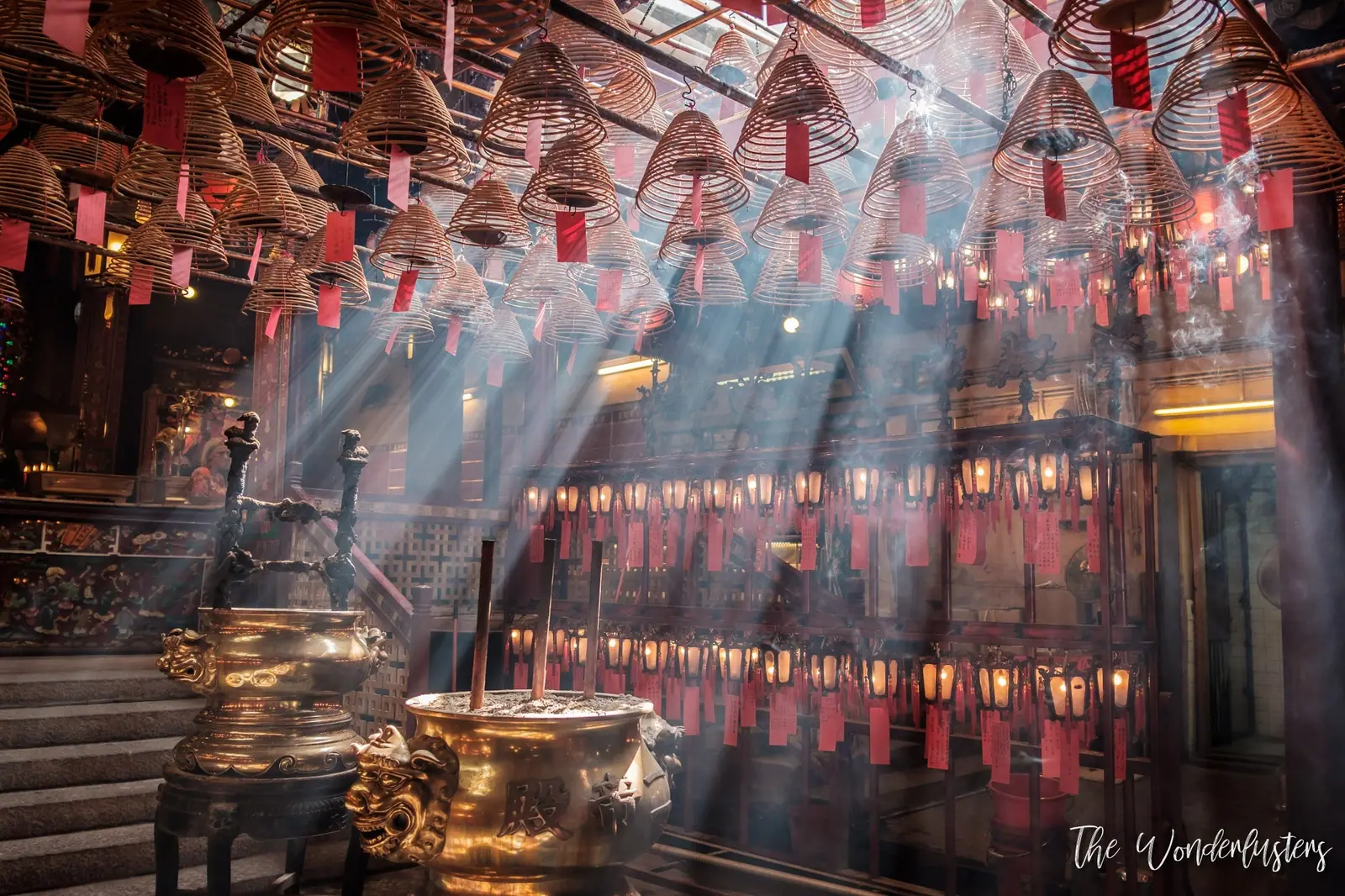
Man Mo Temple is one of the oldest temples in Hong Kong. The atmosphere inside is extraordinary and very photogenic.
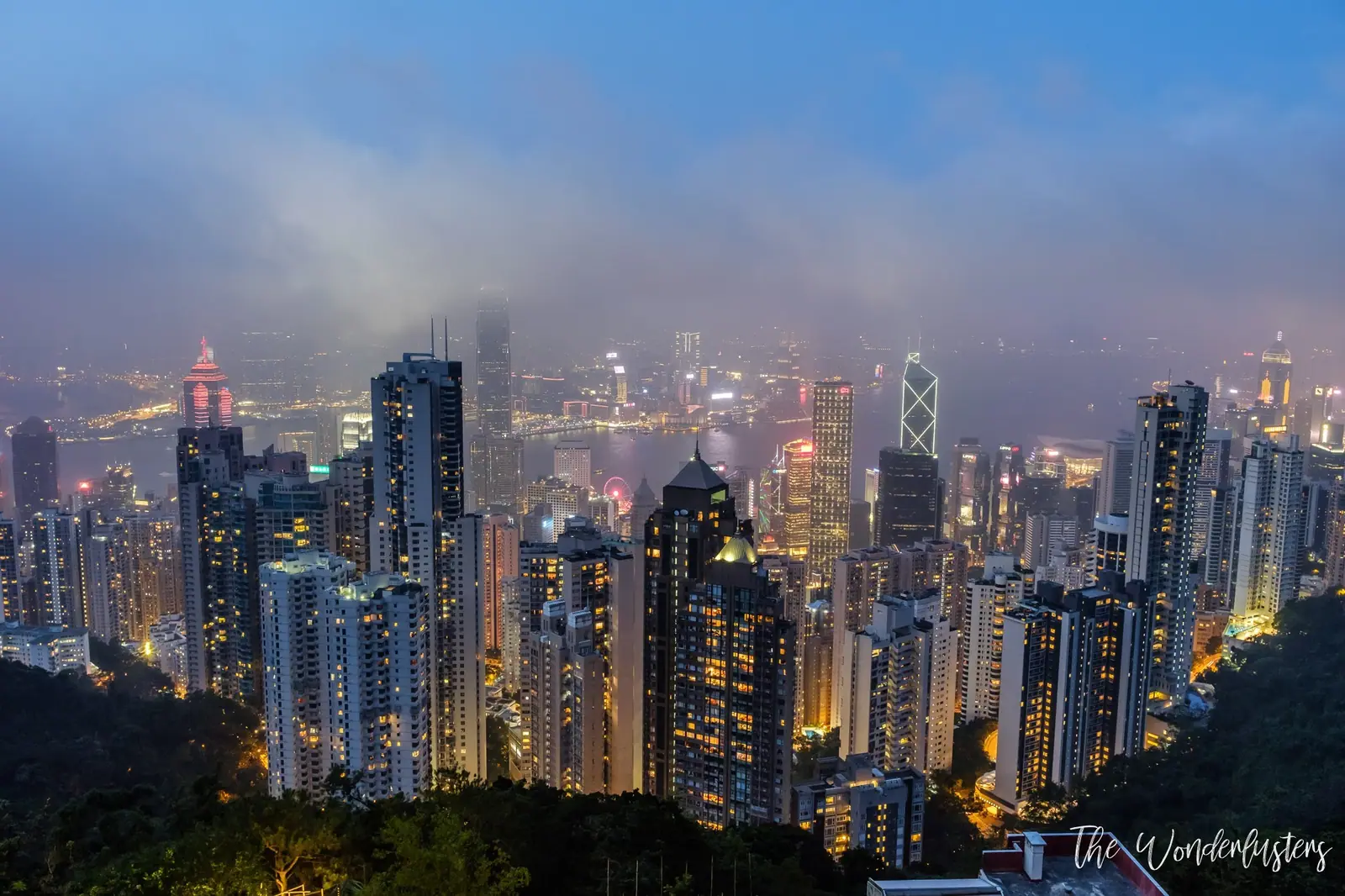
The tram up to Victoria Peak was closed for renovation, so we took the bus instead. The view over the whole city from the Peak is magnificent! During the day, smog usually keeps you from seeing very far, but after dark the show is magical.
2026 update: The Peak Tram has been running again since August 27, 2022, after an upgrade that brought new, larger tramcars and renovated termini (official announcement).
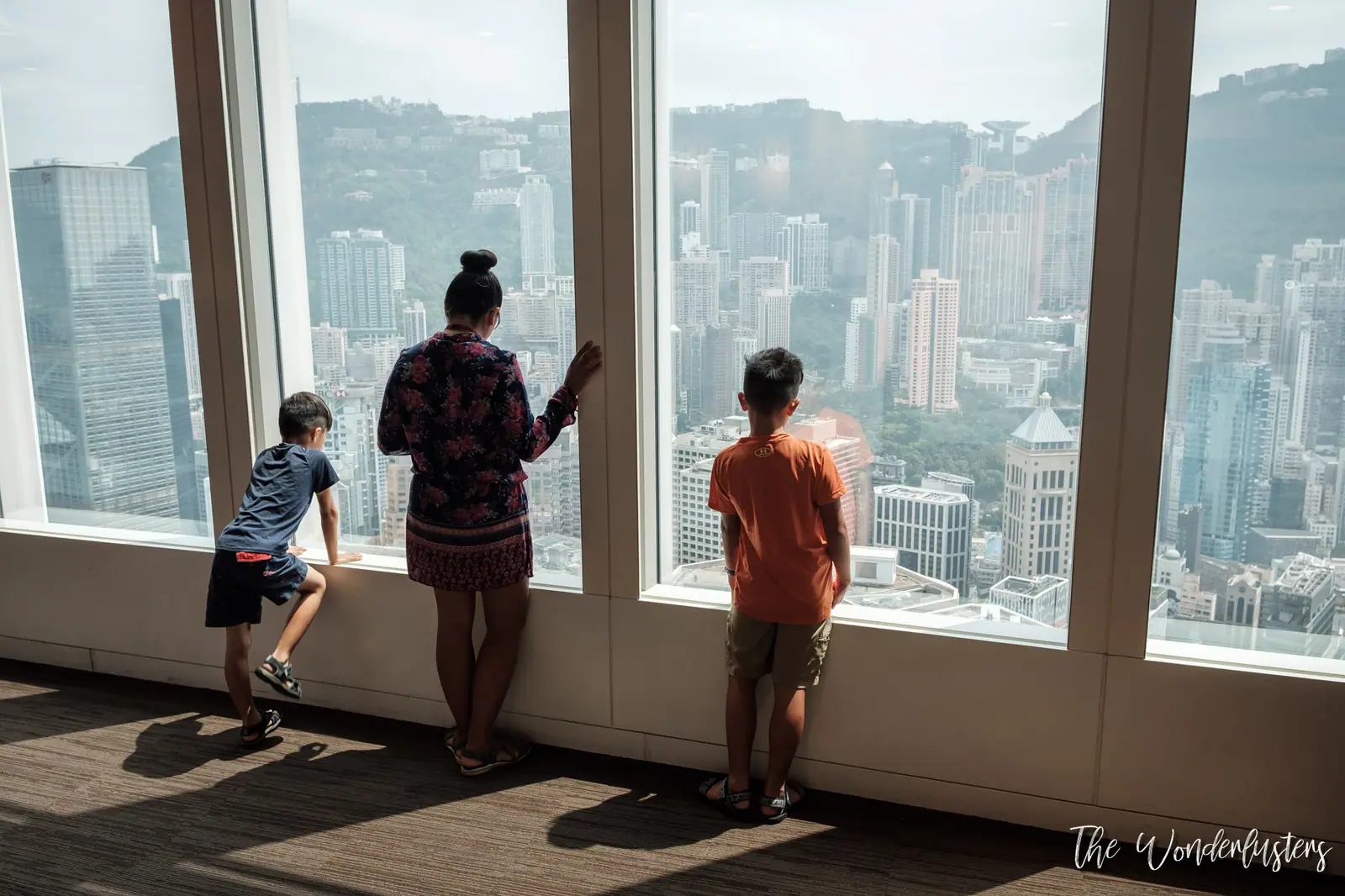
We went up to the observatory on the 55th floor of Two International Finance Centre to look out over the skyscrapers of Hong Kong Island.
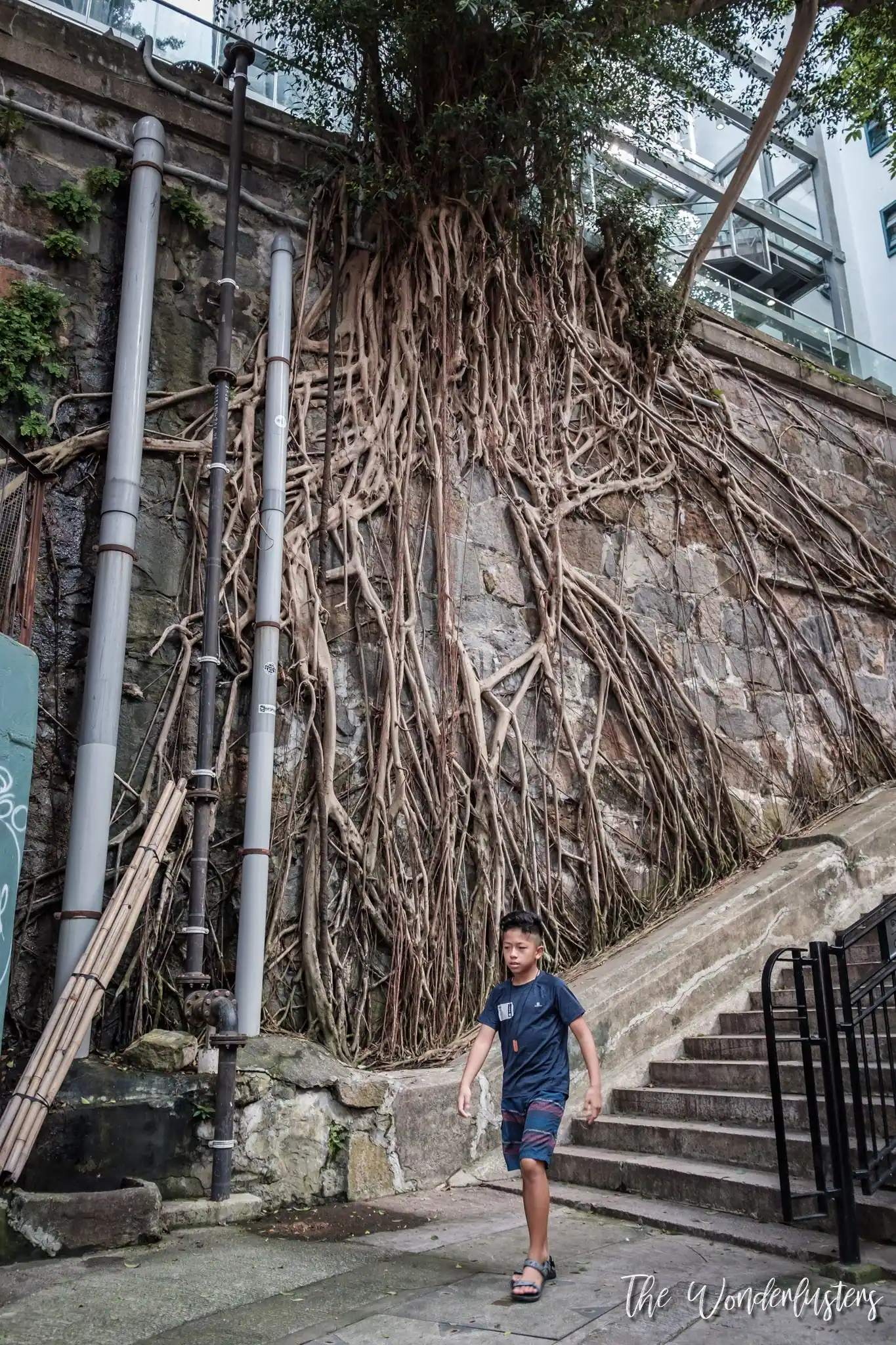
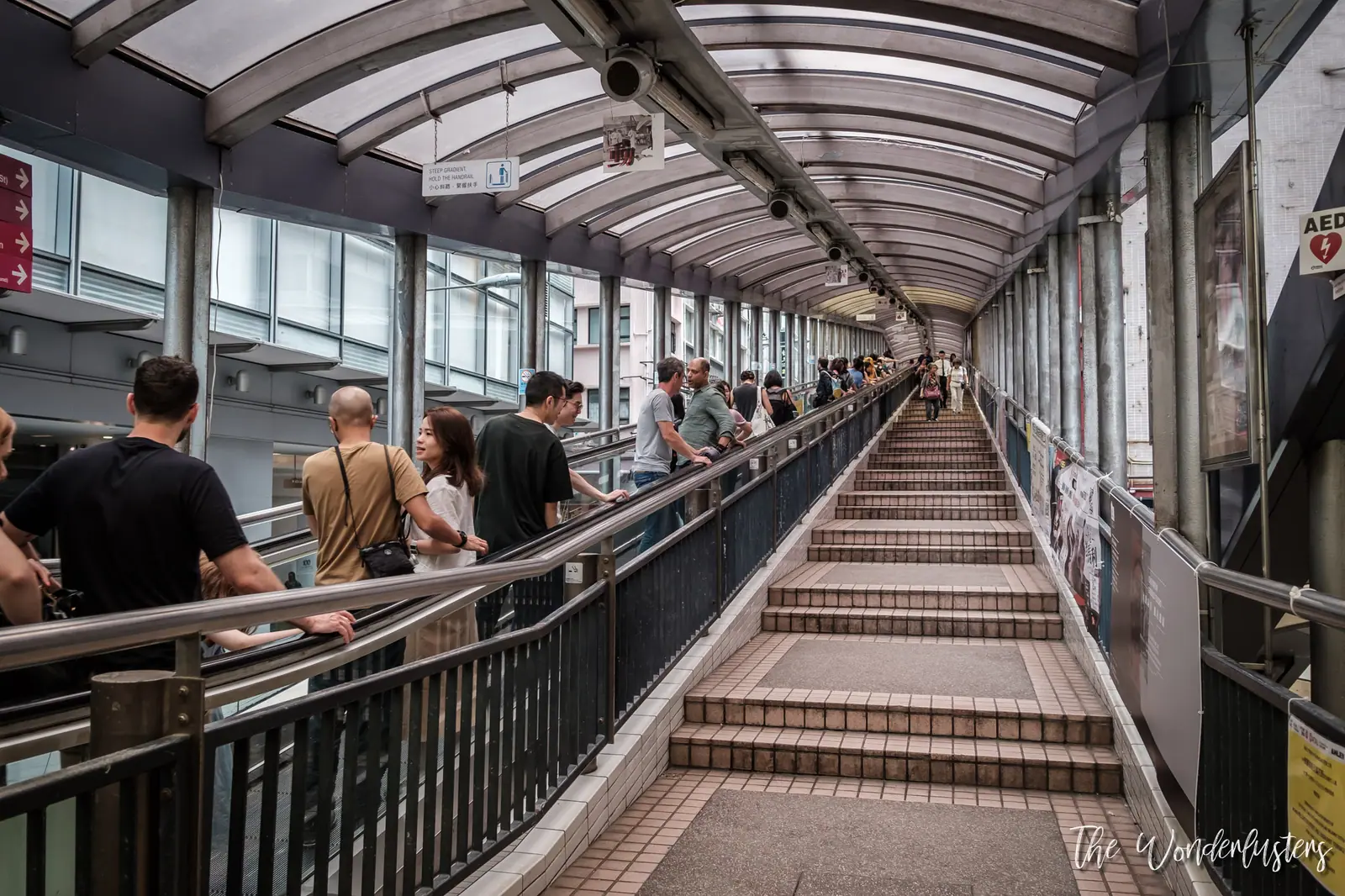
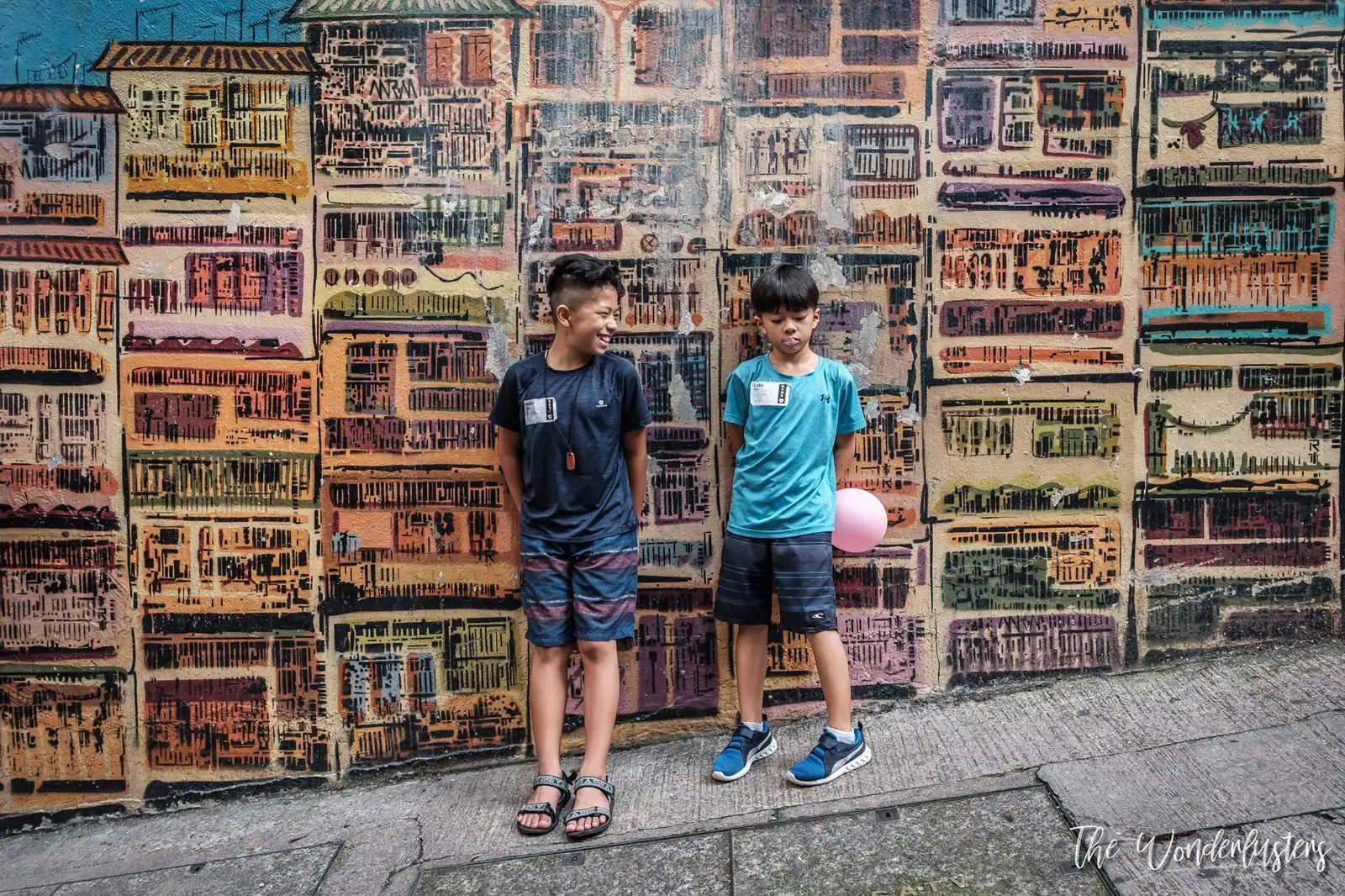
Wandering the island’s small streets, we also made plenty of discoveries.
Lantau Island
With its 7.5 million inhabitants and an average density of 6,300 people per square kilometer, you would think Hong Kong has little green space. Yet 75% of its 1,100 square kilometers is green, which squeezes the entire population into 25% of the territory! Take away urban parks, open spaces and roads, and only 15% of the land is actually inhabited.
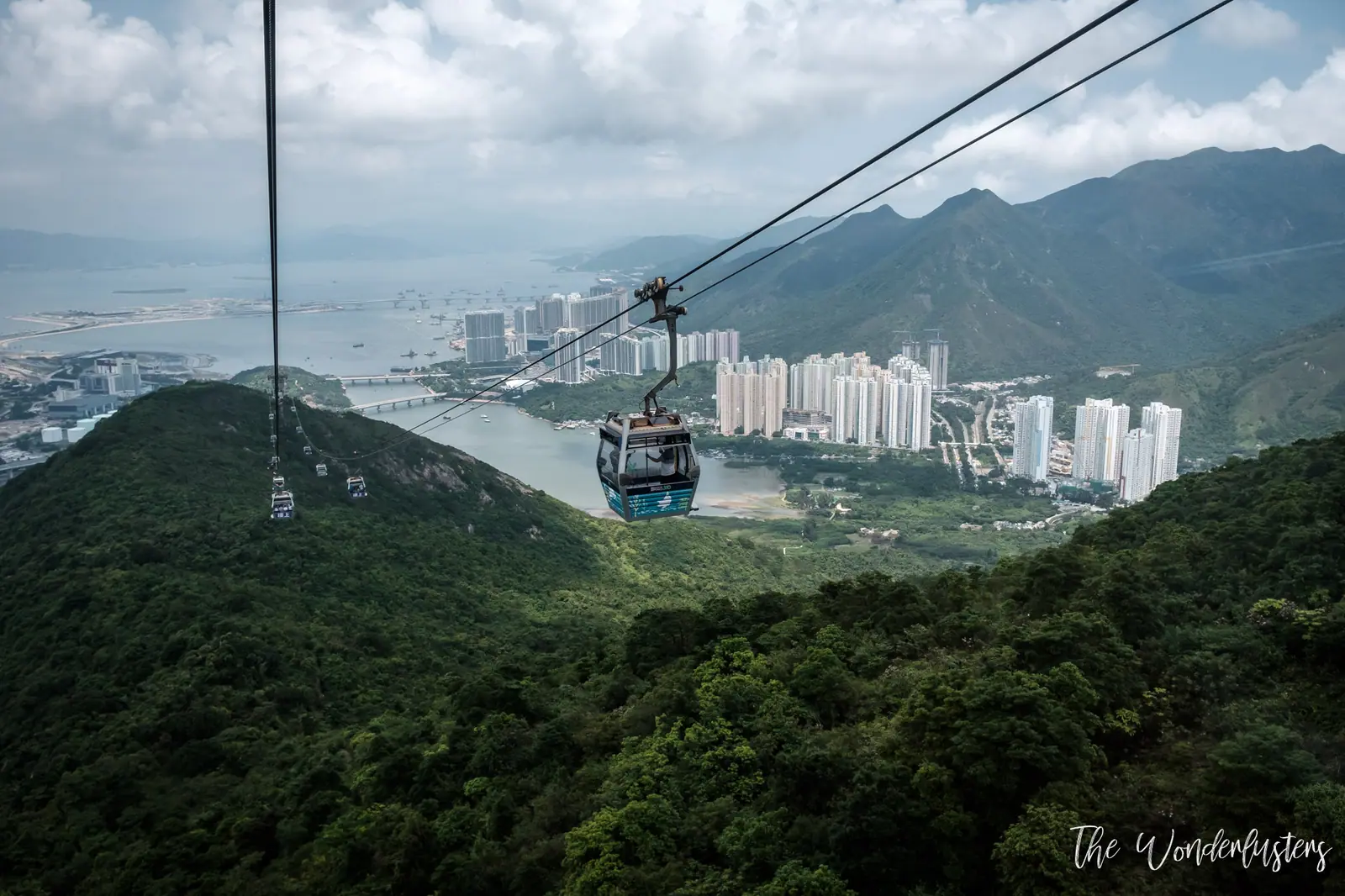
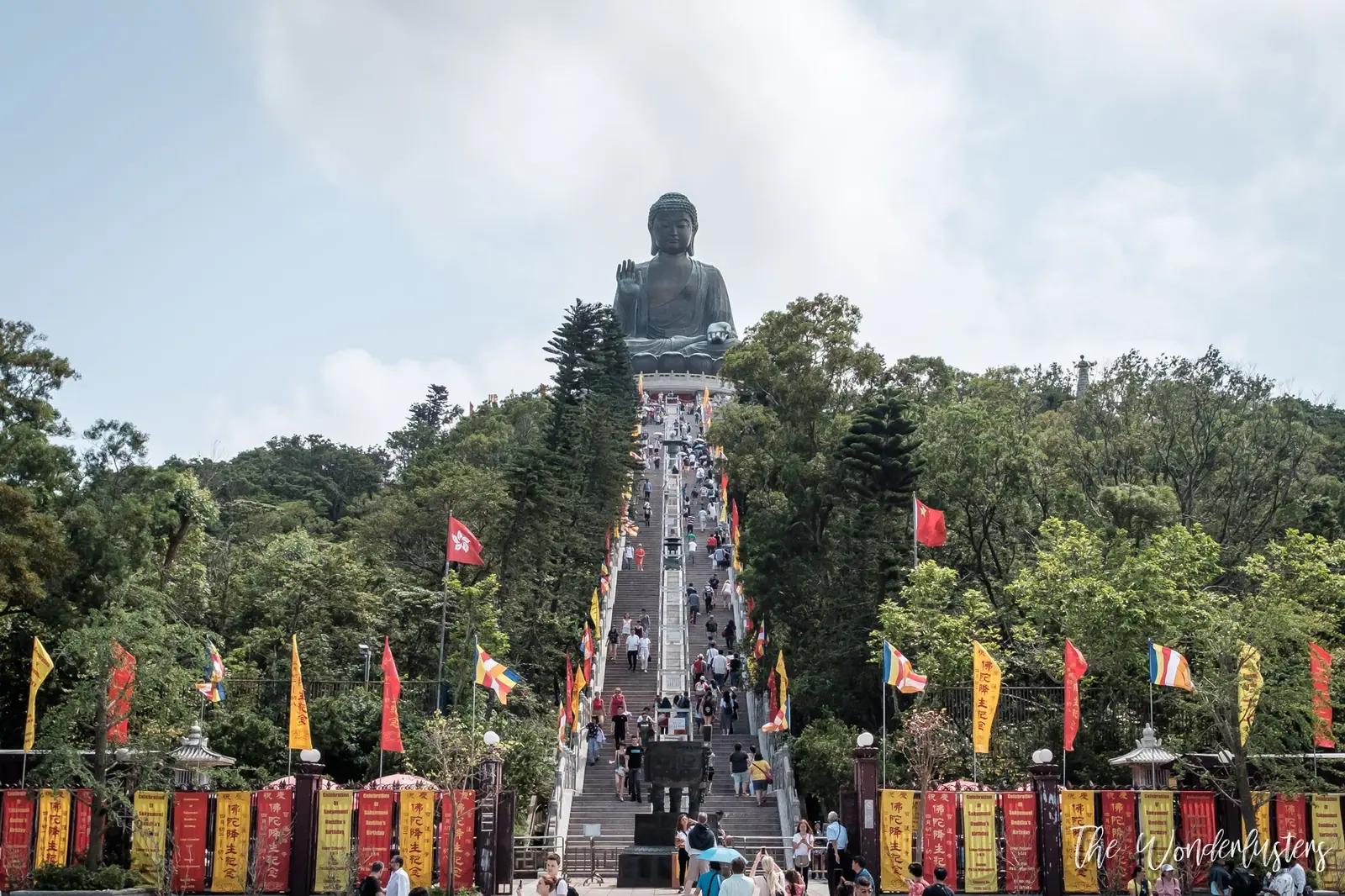
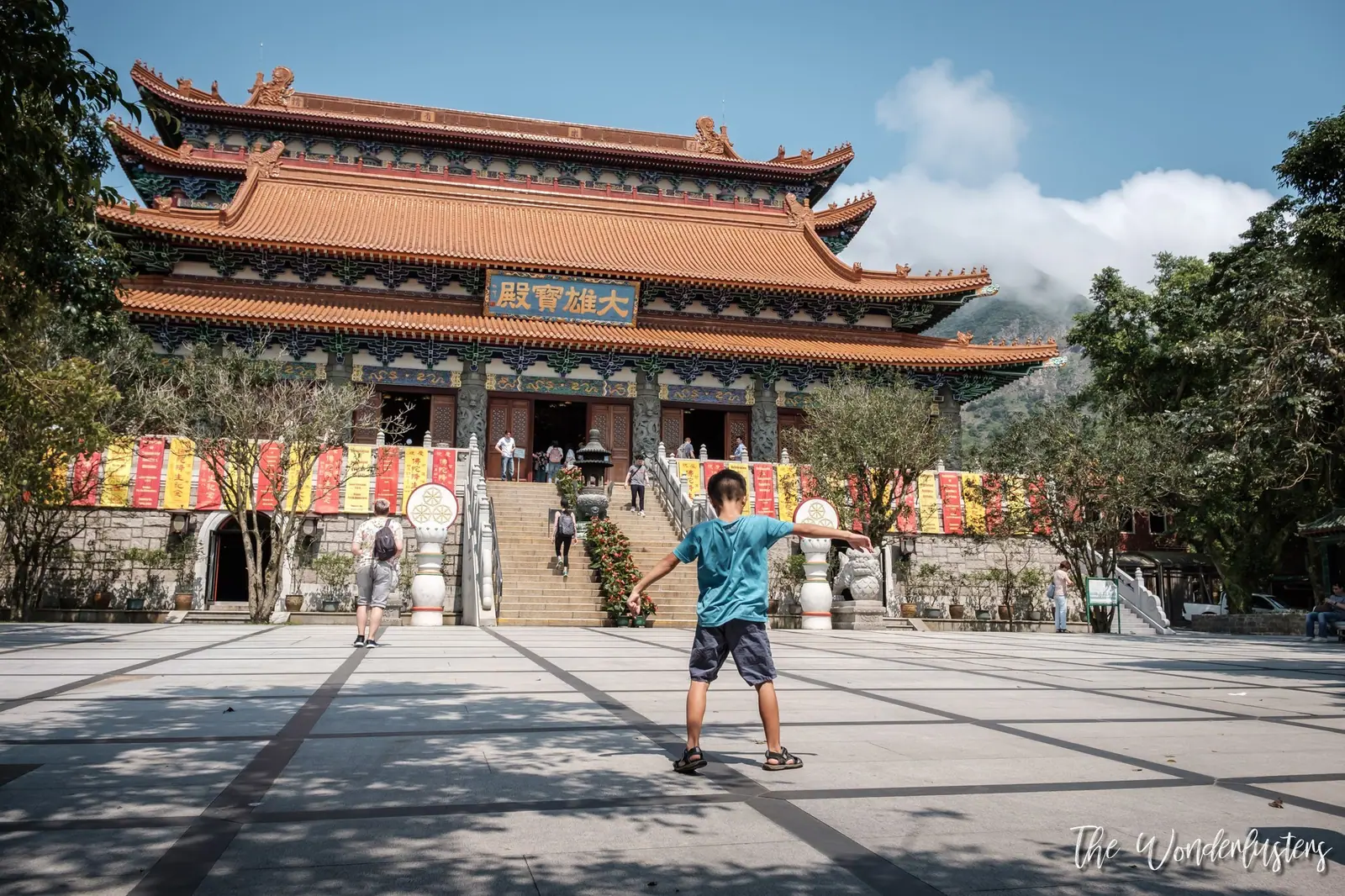
We rode the 5.7 km cable car to visit the Tian Tan Buddha and Po Lin Monastery on Lantau Island. Standing 34 m tall and weighing 250 tonnes, the Buddha is billed as the largest seated outdoor bronze Buddha in the world. They’ll invent any title to attract tourists! One thing is certain: it hadn’t changed since our last visit 10 years earlier.
Macau Peninsula
We crossed to Macau on the brand-new Hong Kong–Zhuhai–Macau Bridge. This engineering feat, a series of bridges and tunnels totaling 55 km, was then the world’s longest sea crossing. Two border checks later (one in Hong Kong, the other in Macau), we found ourselves in a whole new world.
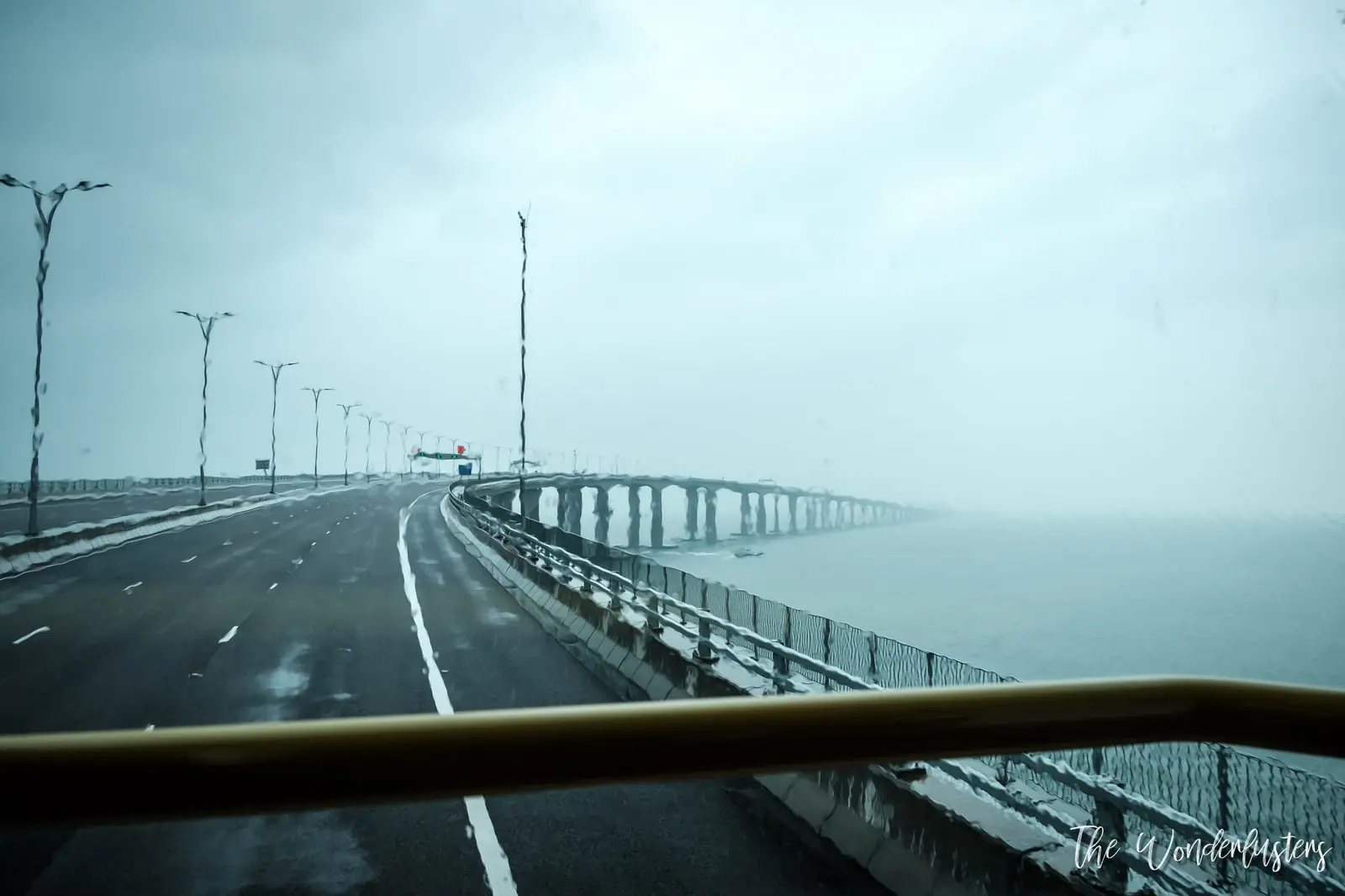
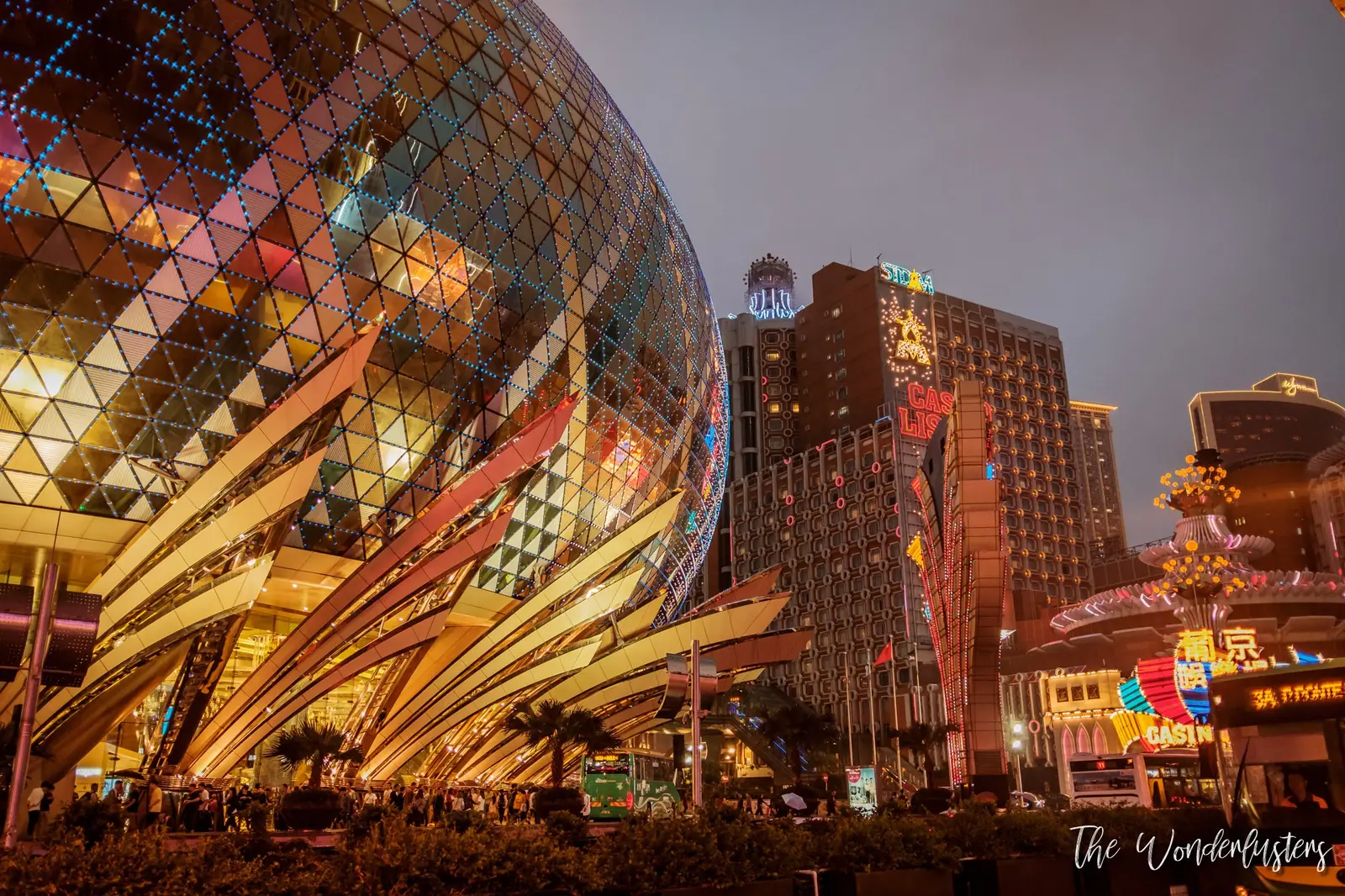
Technically, we hadn’t changed countries, but it certainly felt like it. In Macau, the signs are in Portuguese, the currency is the pataca, and you can feel the European influence in the city’s architecture. That’s because the Portuguese colonized and administered the territory for more than 400 years!
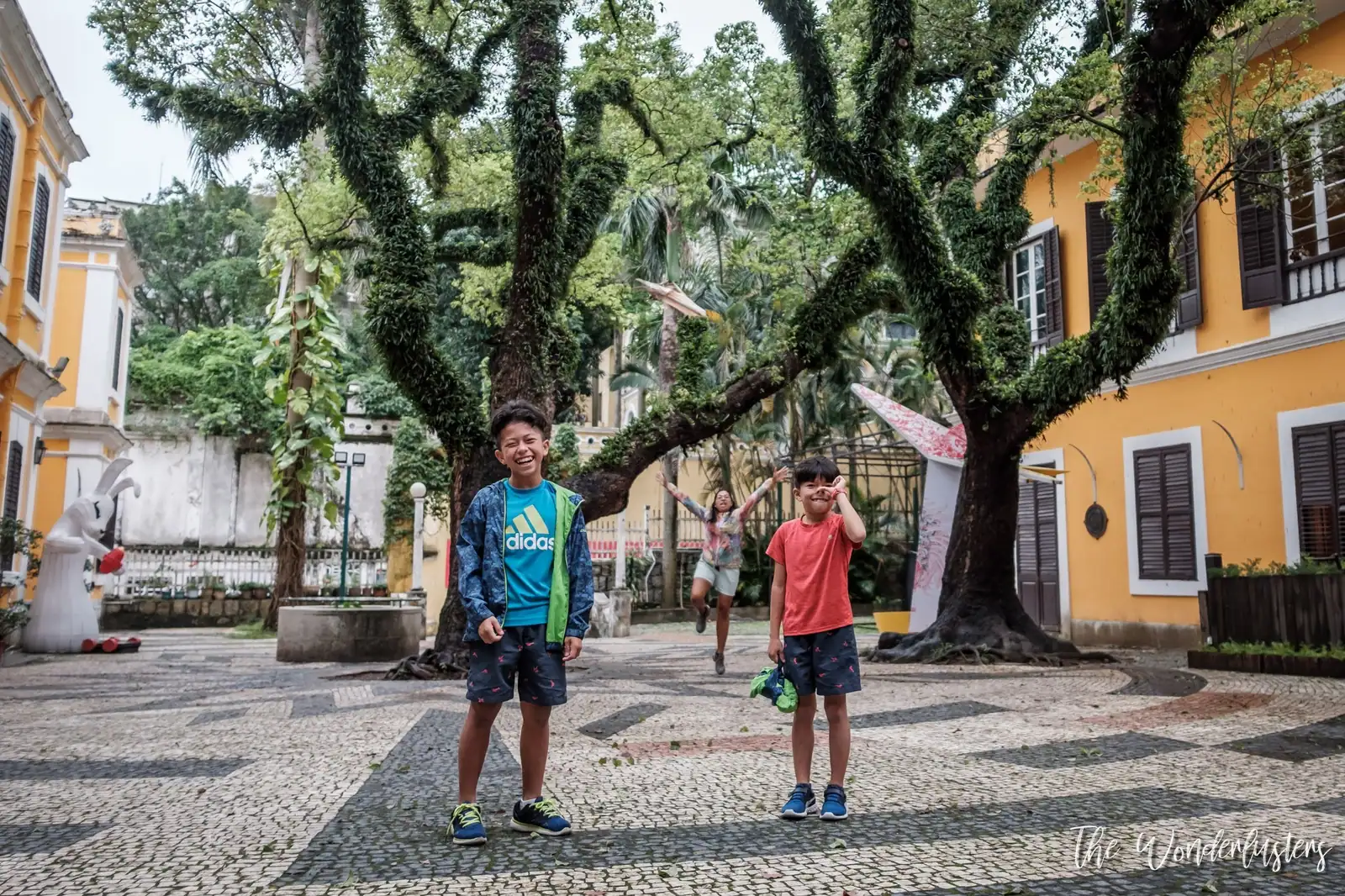
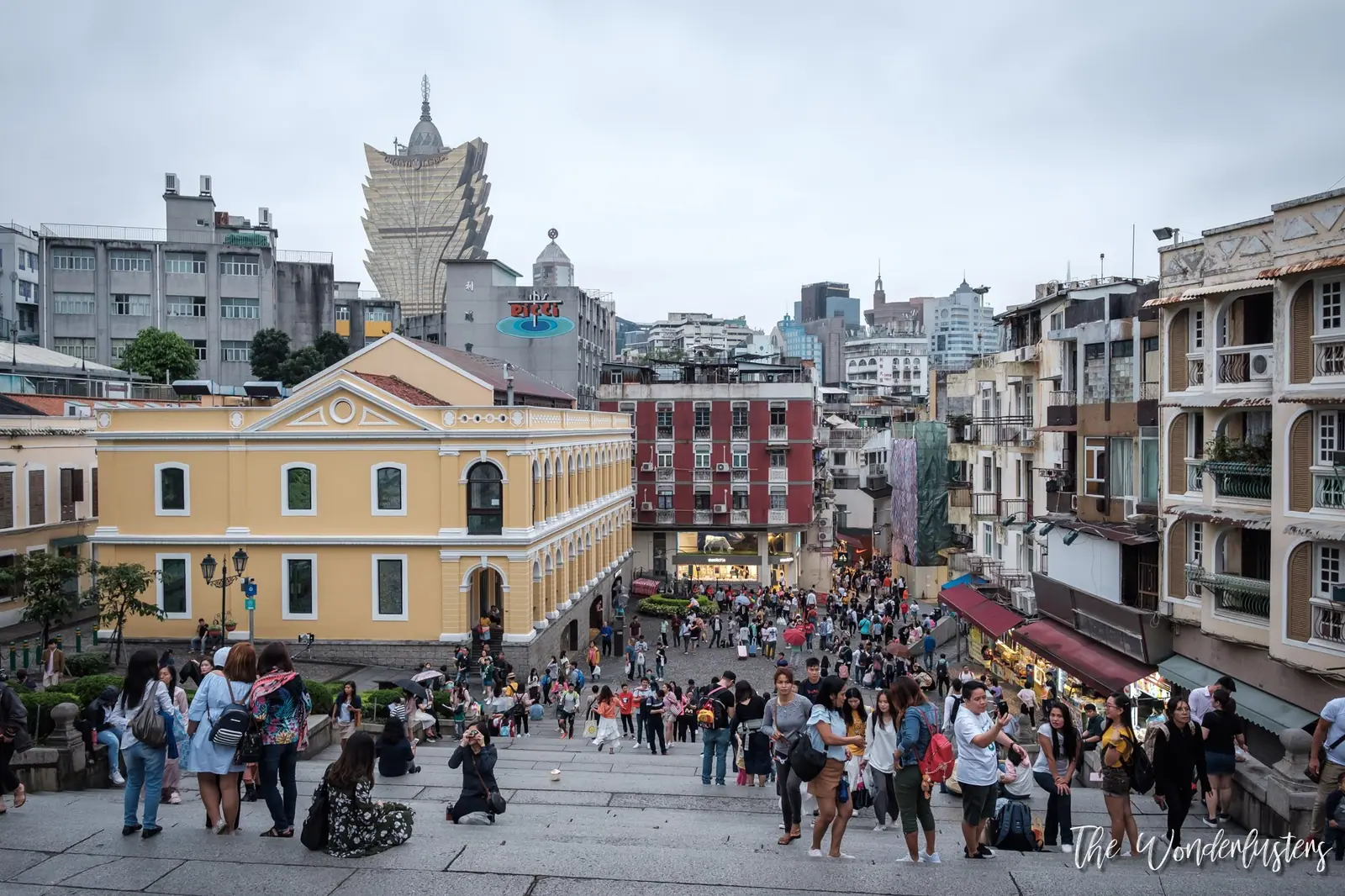
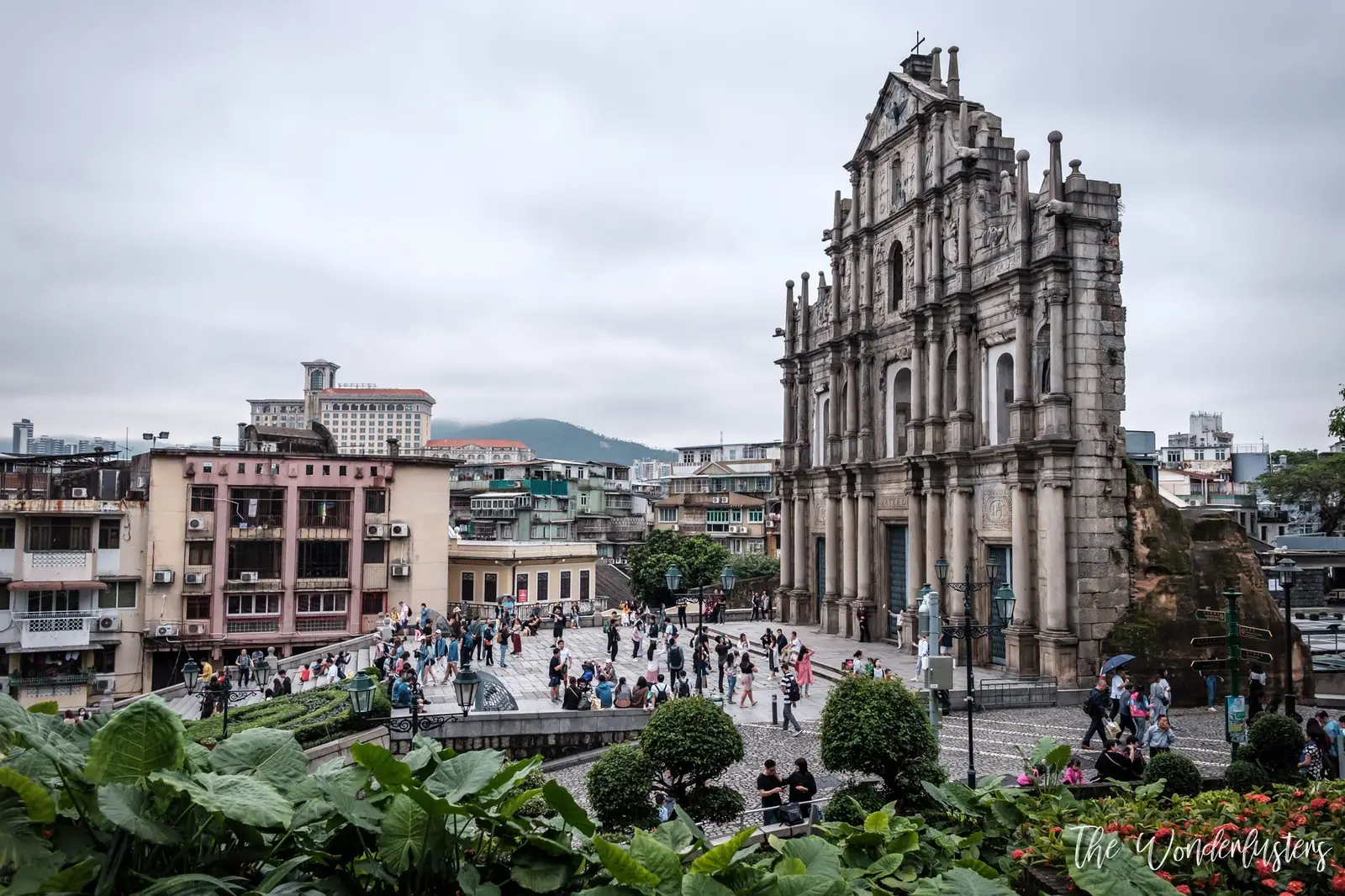
There was no blue sky, but we still visited the main sights of the former colonial city, a UNESCO World Heritage Site, including the Ruins of St. Paul’s, Senado Square and St. Lazarus Church.
Taipa
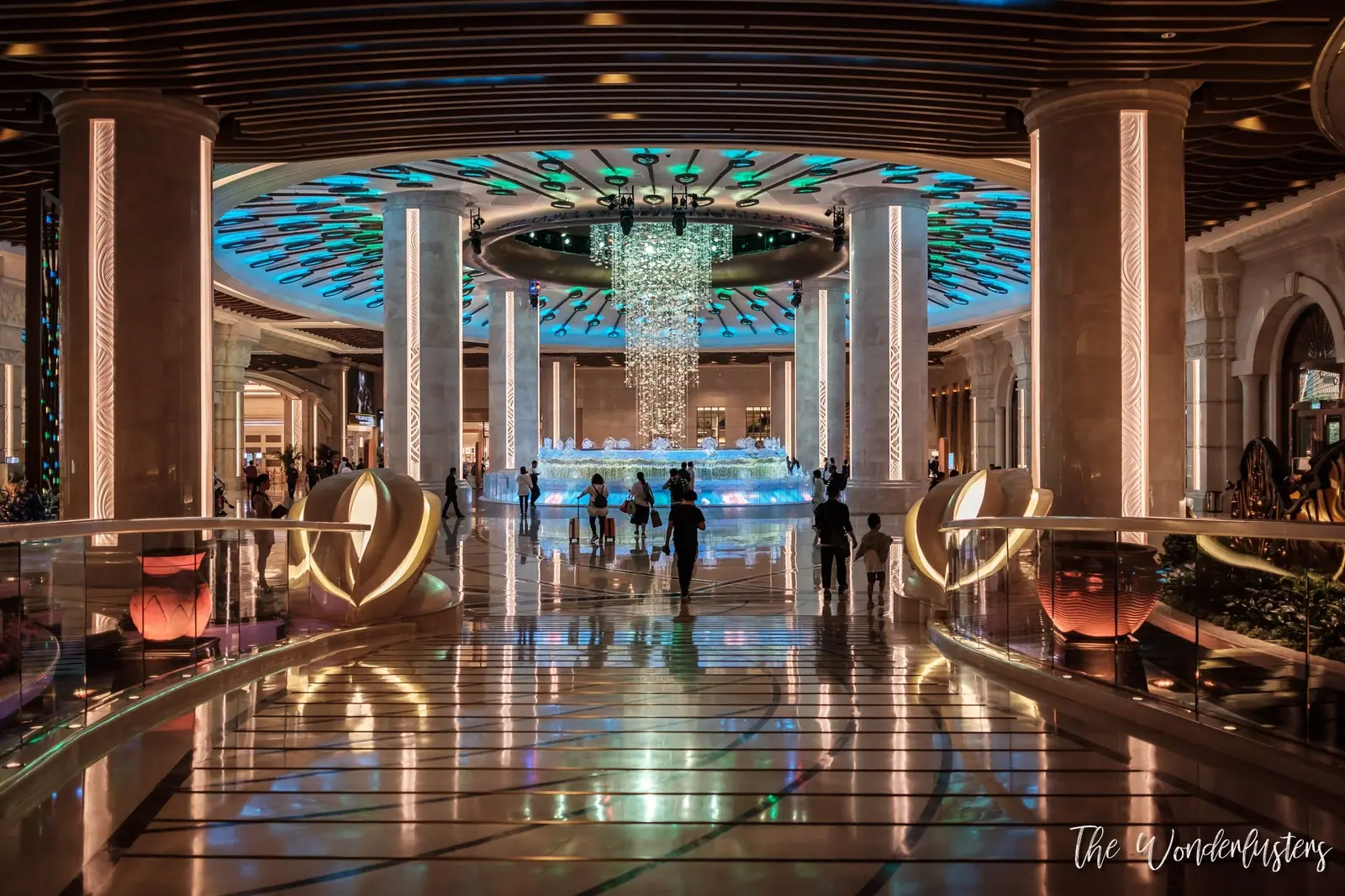
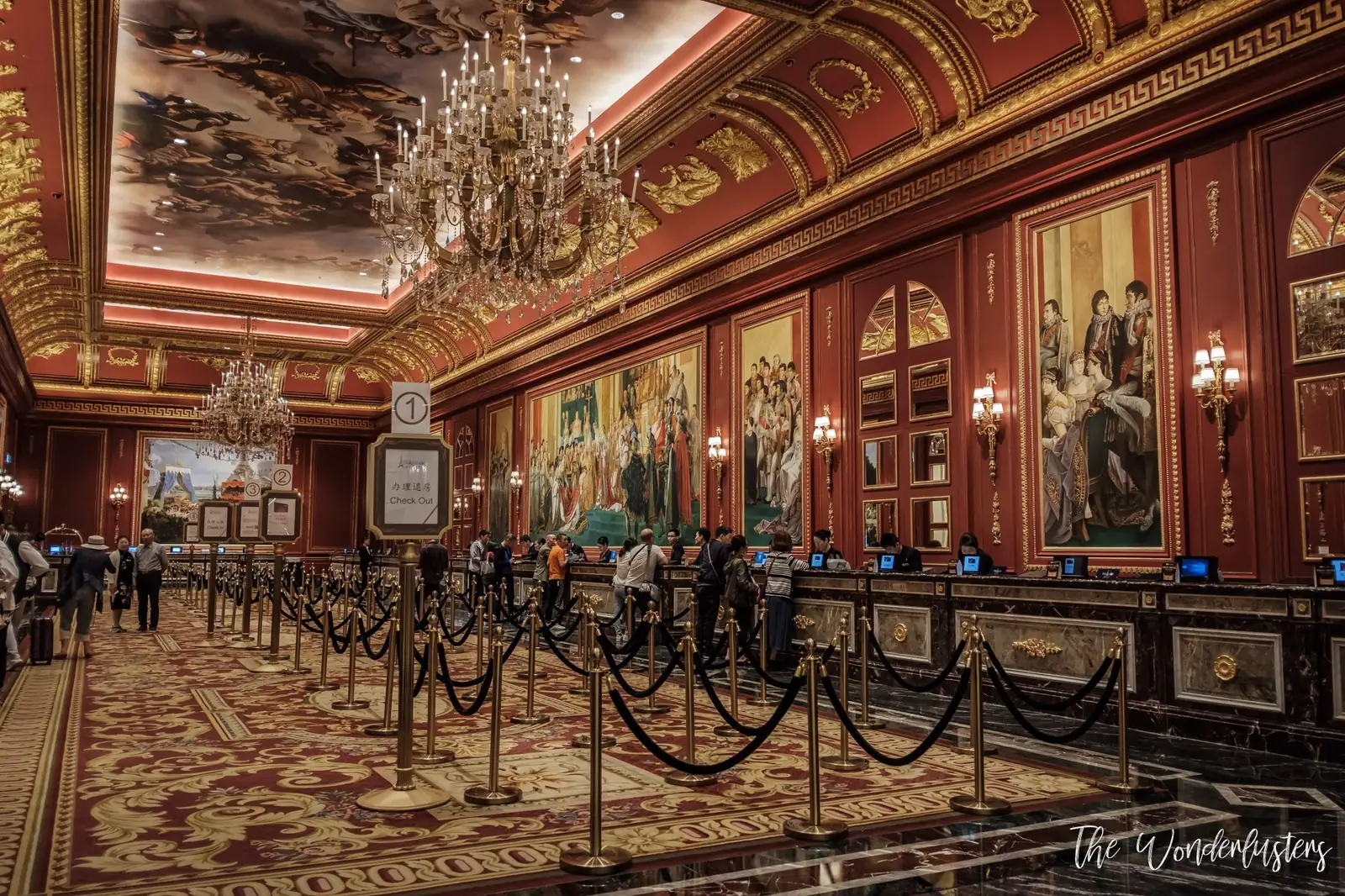
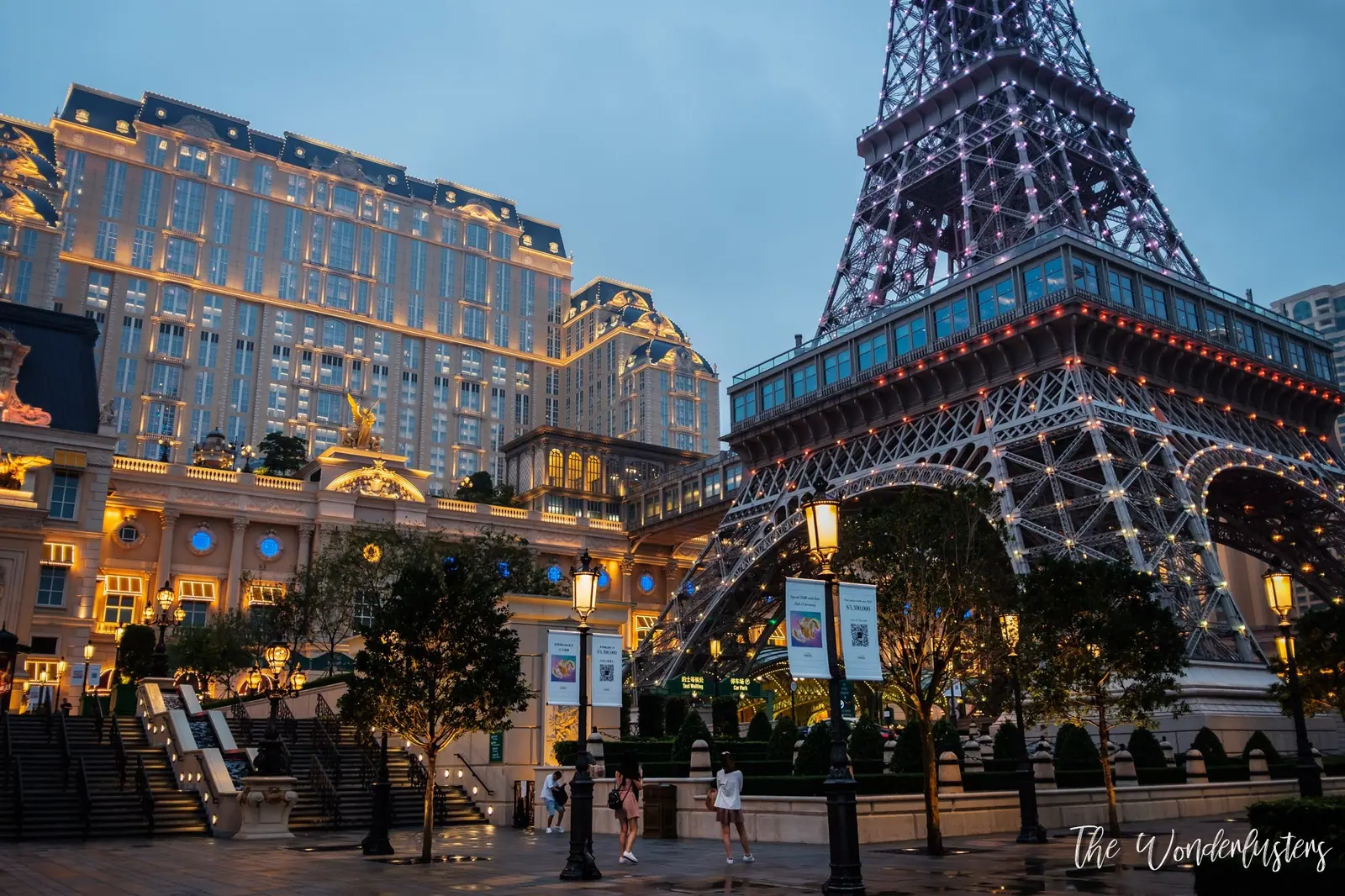
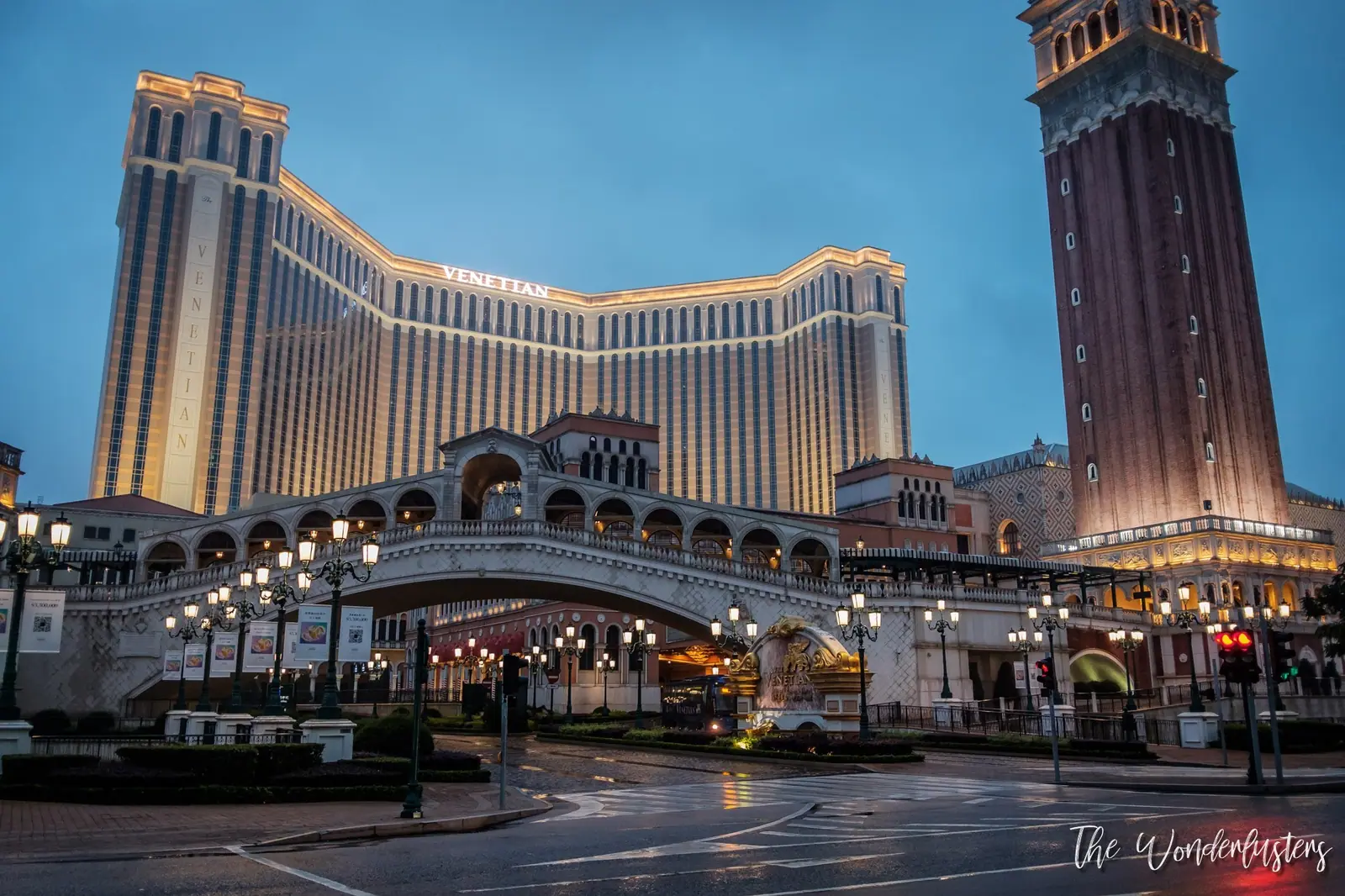
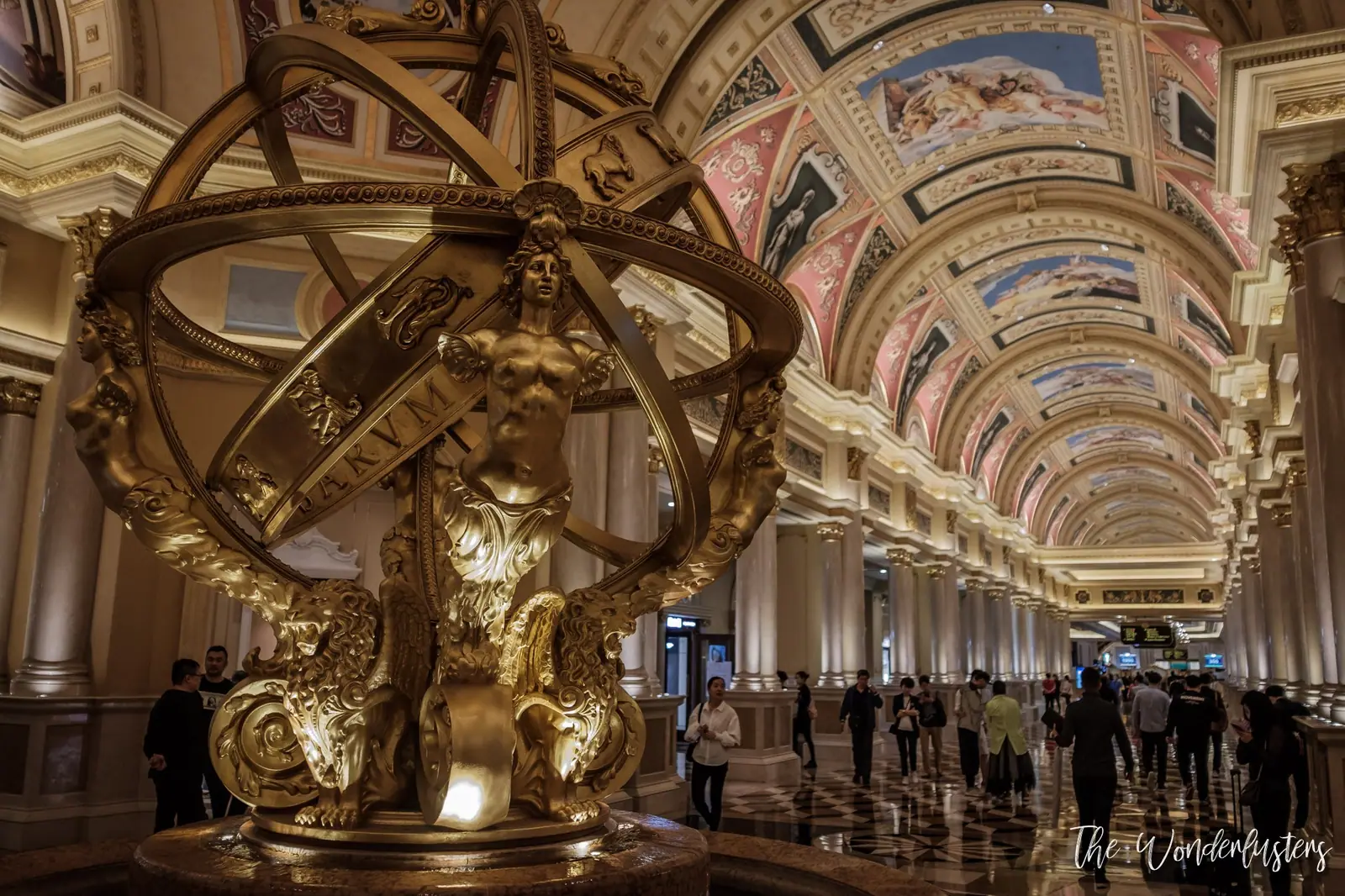
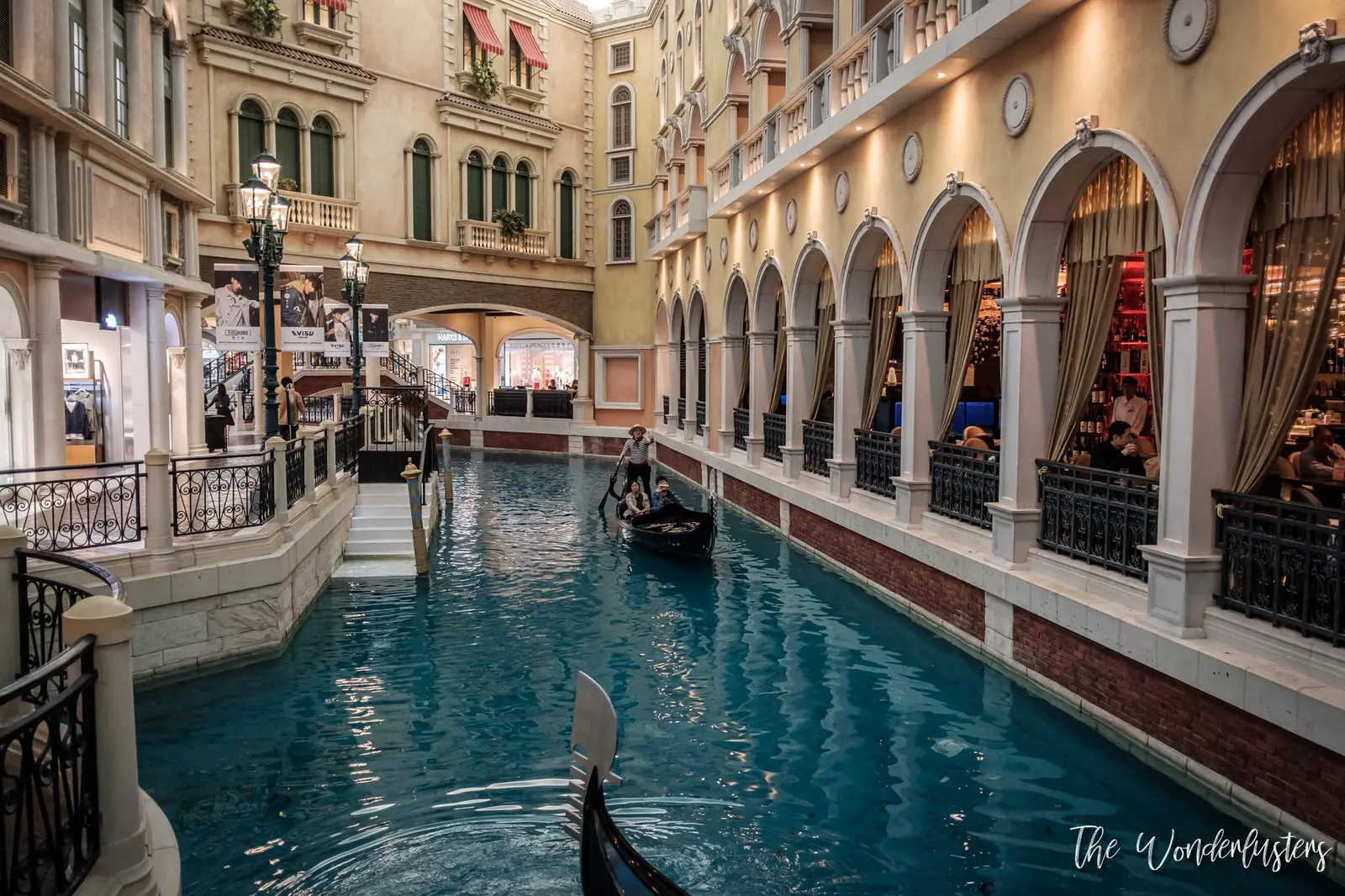
Macau’s economy grew at breakneck speed, mainly thanks to casinos that were generating four times more revenue than those of Las Vegas. At the time, Macau was expected to overtake Qatar in 2020 as the richest “country” in the world by GDP per capita. We could see it for ourselves walking through Taipa, the southern part of Macau, at the foot of an Eiffel Tower and along the canals of Venice.
Planning a Trip to Hong Kong and Macau
Itinerary: 9 Days in Hong Kong, 2 in Macau
We had 11 days between our arrival in Hong Kong and our departure from Macau, and we split them into 9 days in Hong Kong and 2 days in Macau.
Where We Stayed
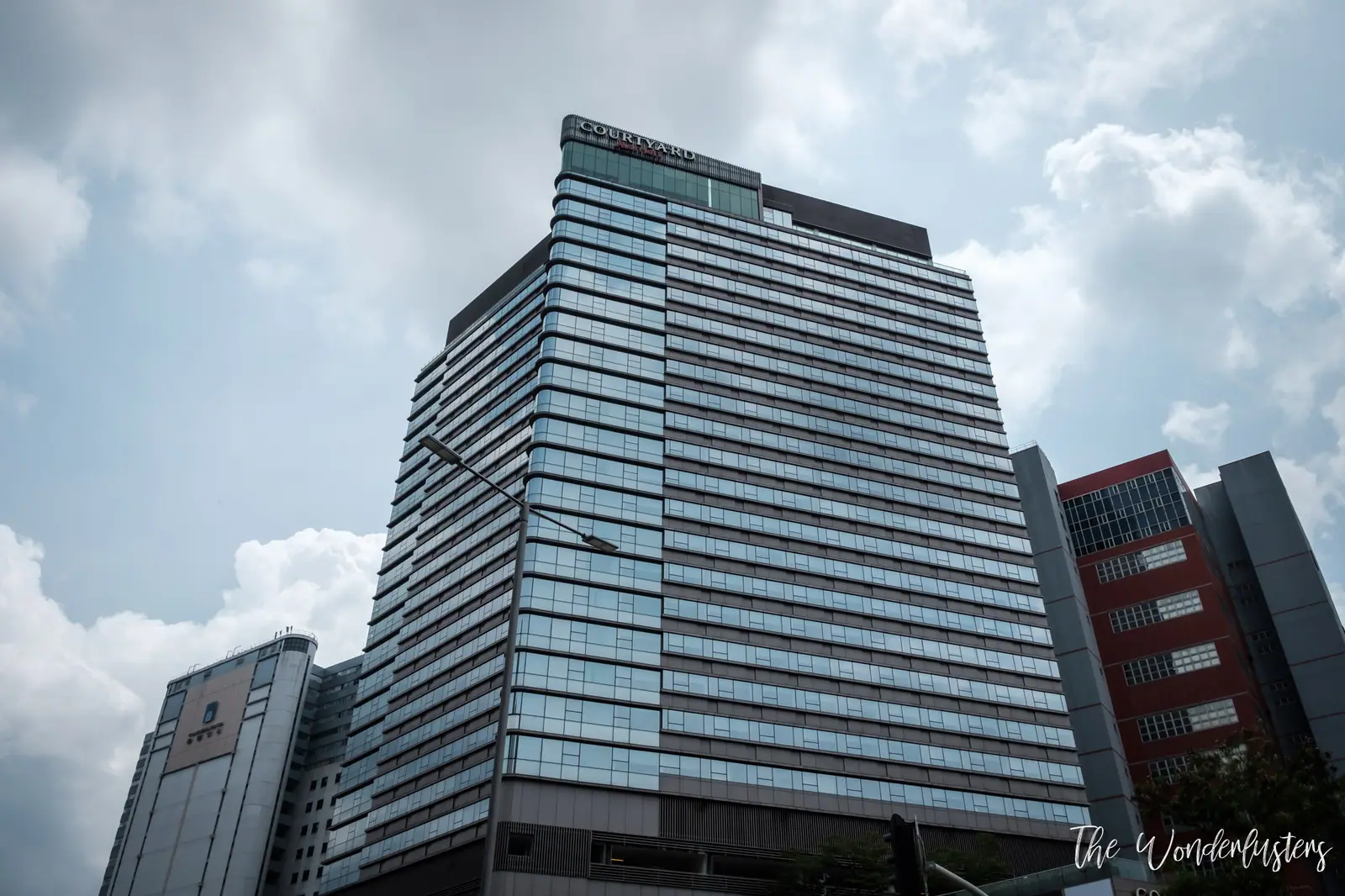
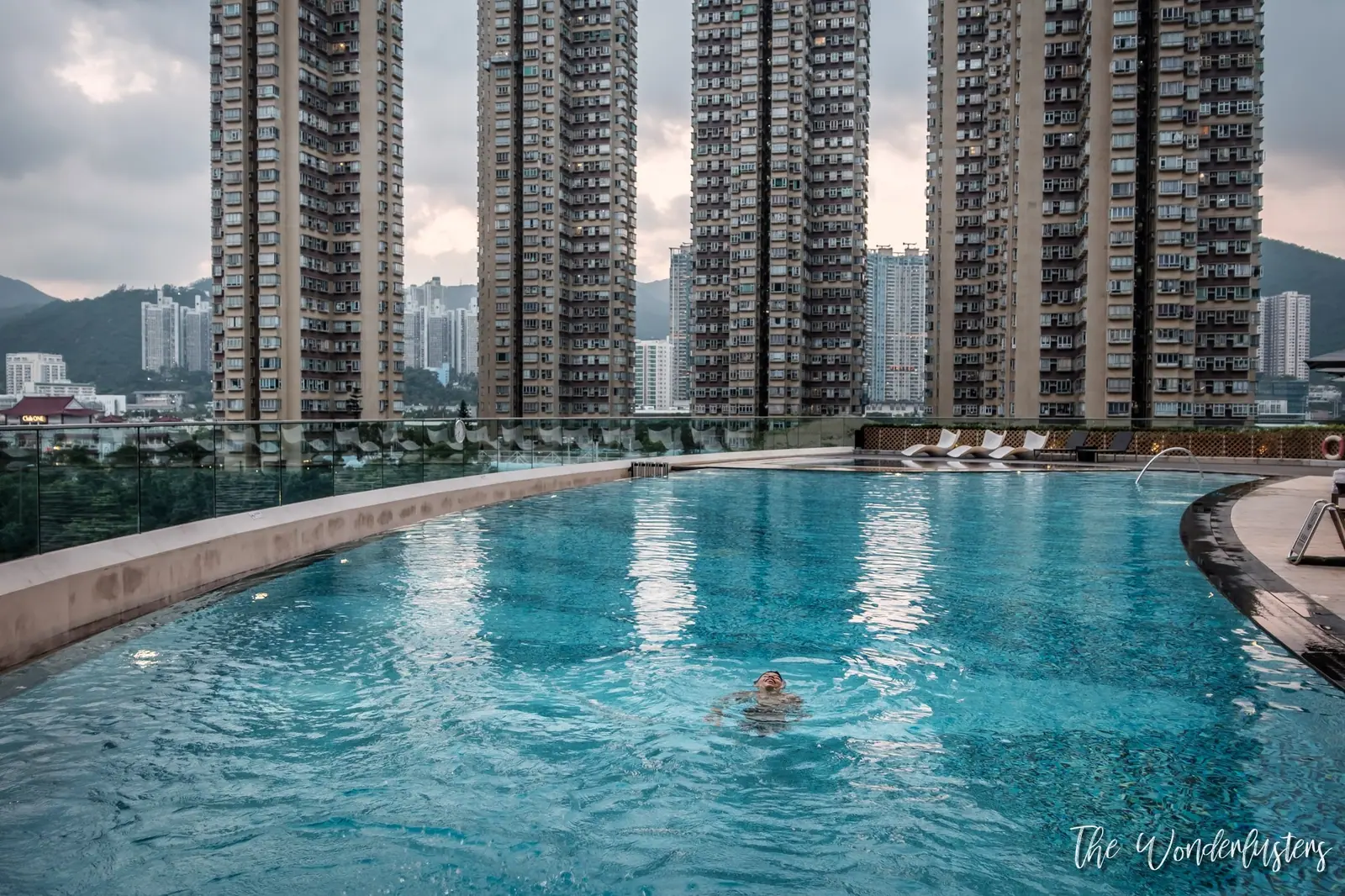
In Hong Kong, thanks to our points, we stayed for free in a lovely room with a view at the Courtyard by Marriott Hong Kong Sha Tin, with a pool, sauna and gym. Our Marriott status earned us an upgrade. For 9 nights, this category 2 room (12,500 points per night) cost us 10,000 points per night, thanks to Marriott’s fifth-night-free promotion. A value of more than 1,800 USD!
2026 update: Marriott Bonvoy scrapped its award chart and hotel categories in March 2022. The number of points for a free night now varies with demand and the hotel’s cash rates (Afar).
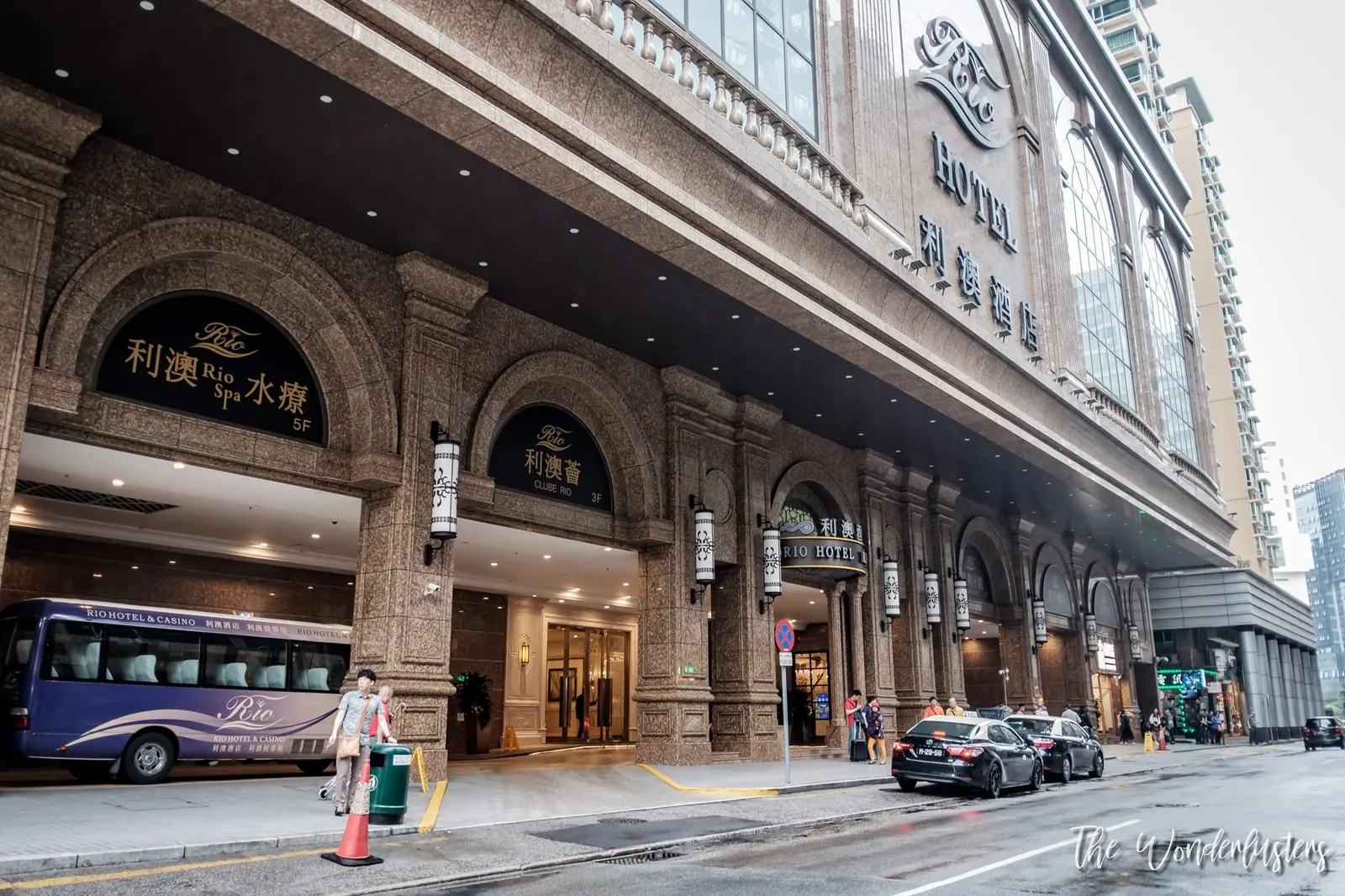
In Macau, we spent our first night in the northern part of the territory, at the Rio Hotel & Casino, so we could visit the main sights.
2026 update: The casino at the Rio Hotel closed in June 2022 (Macau Daily Times).
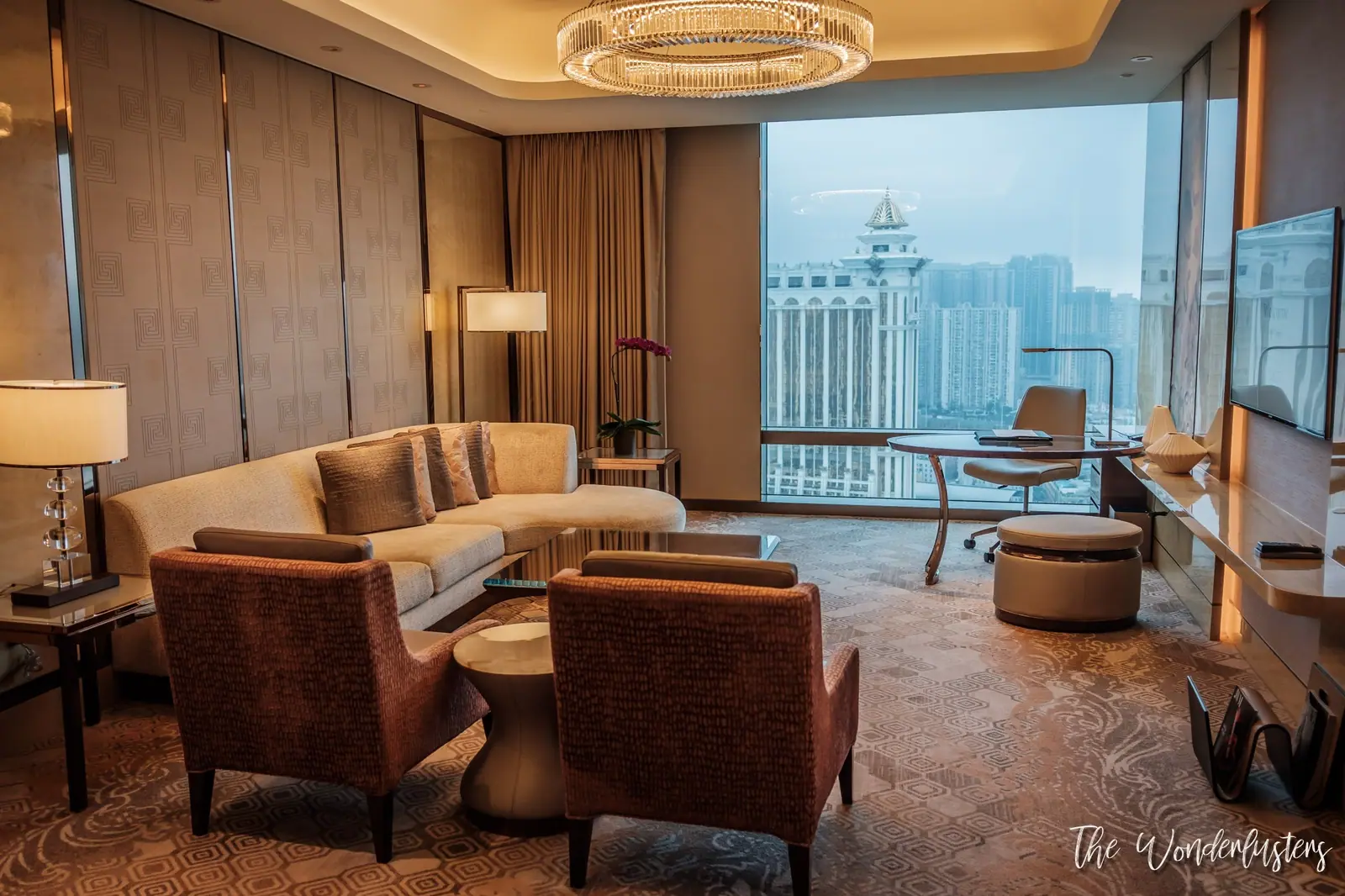
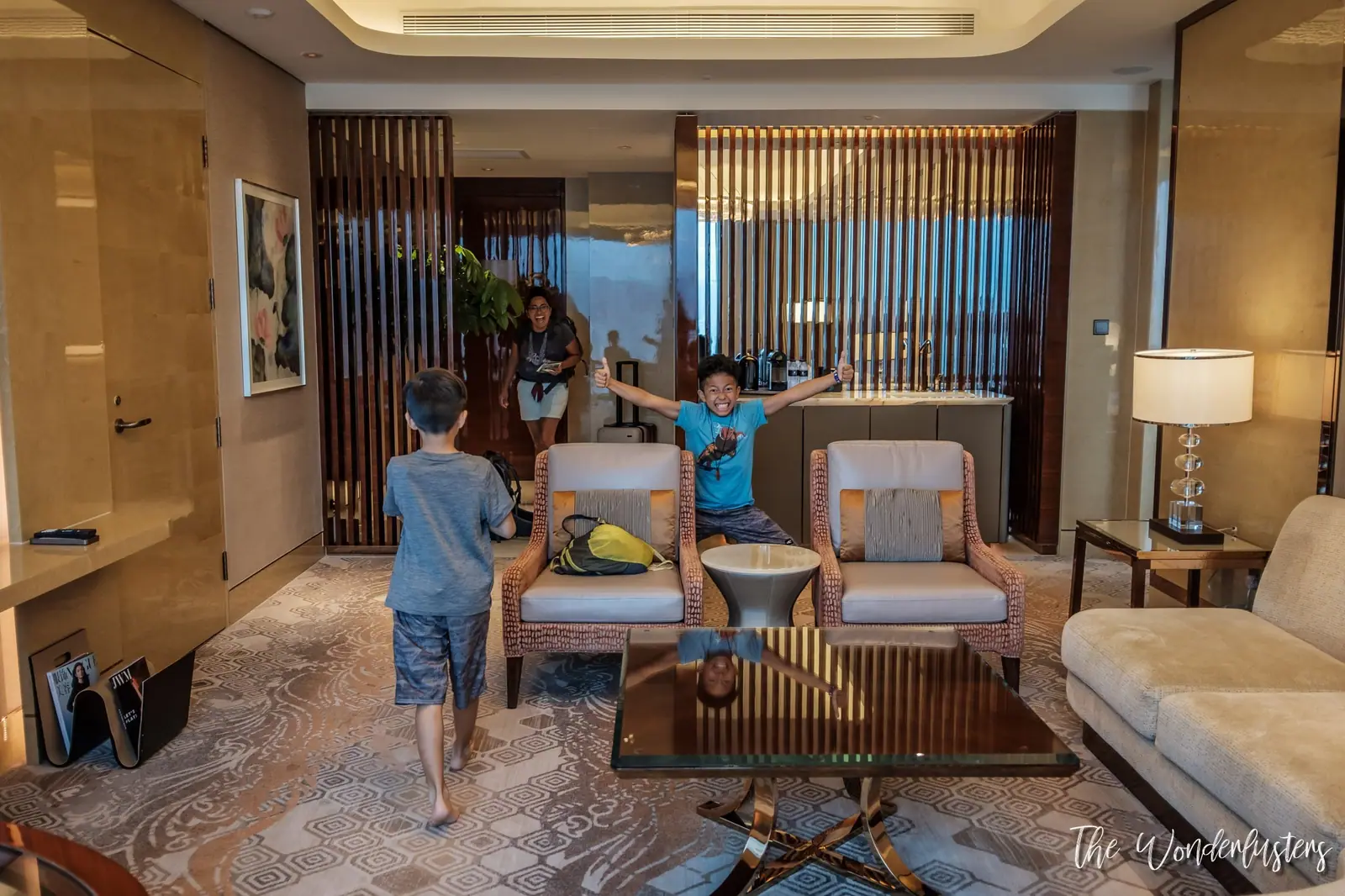
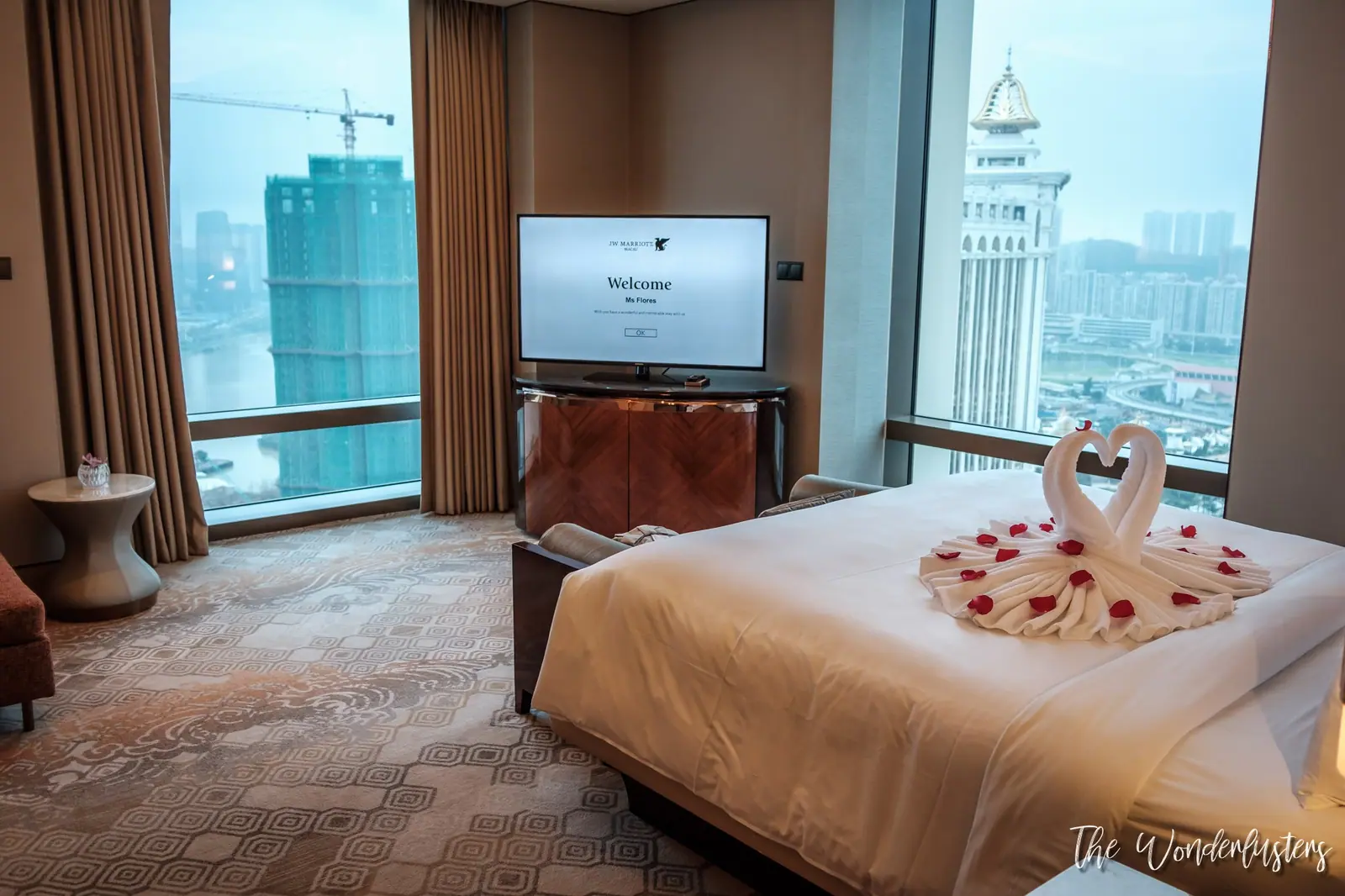
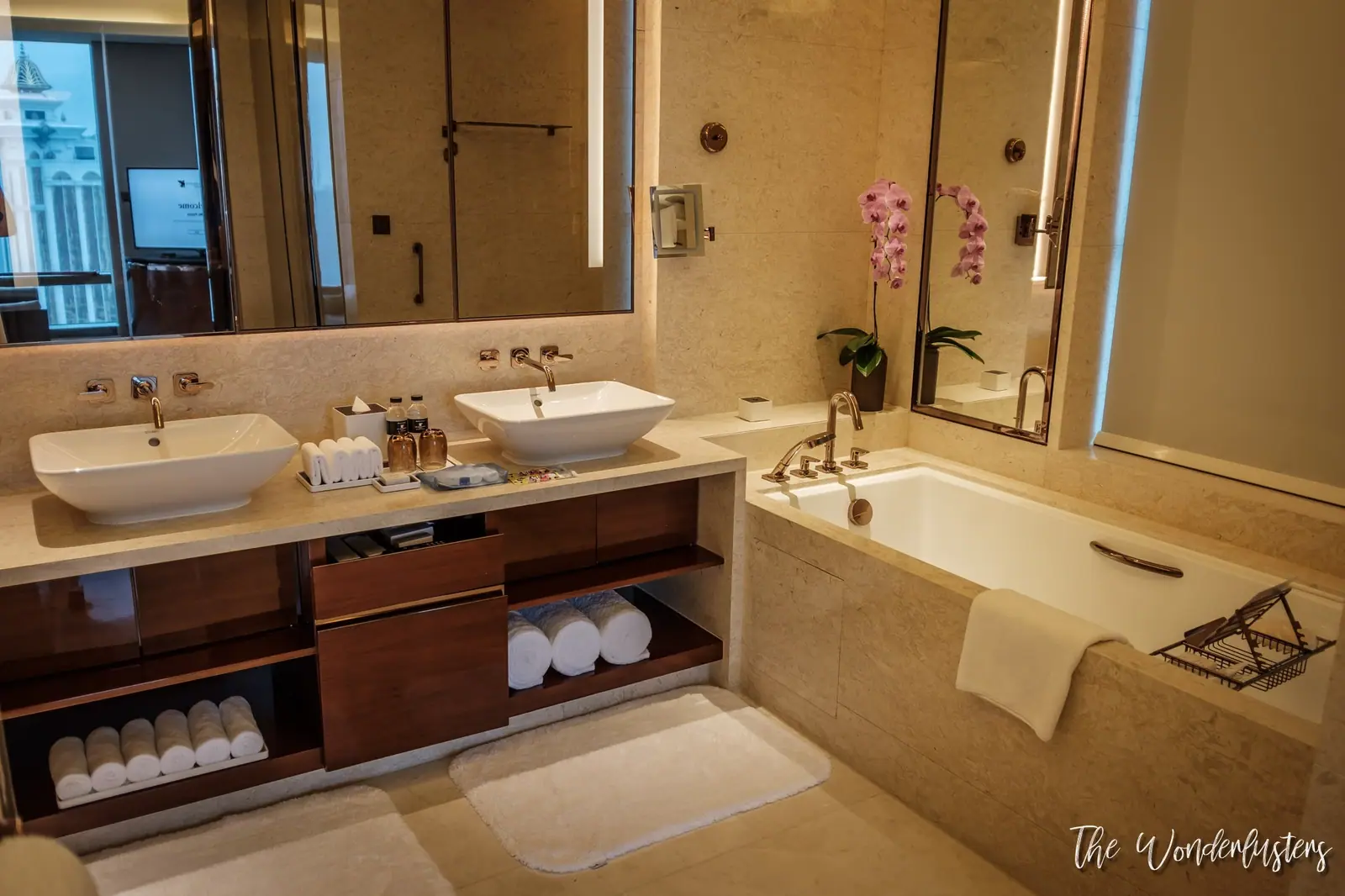
For our second night, we chose Taipa, and more precisely the JW Marriott Hotel Macau.
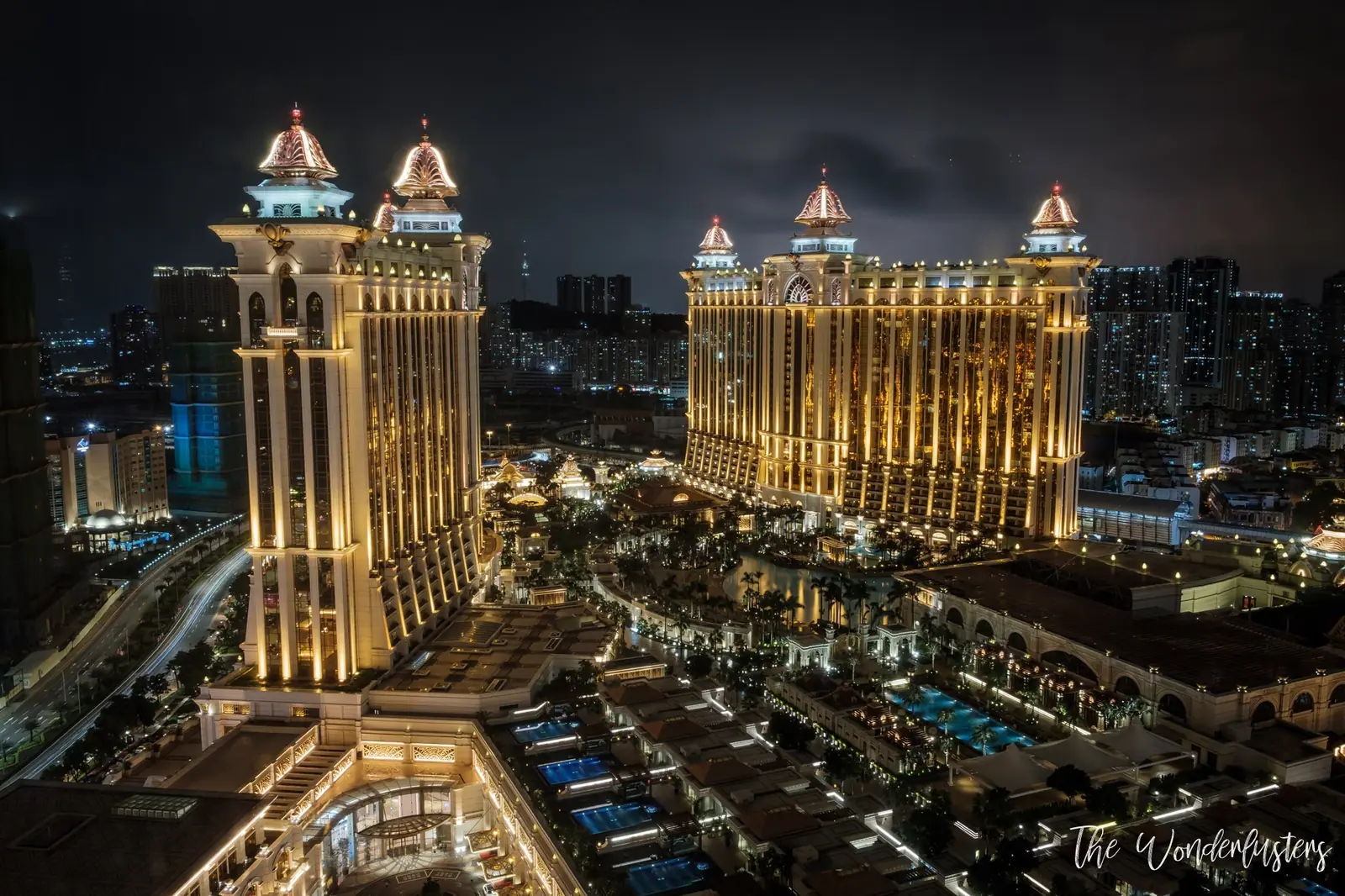
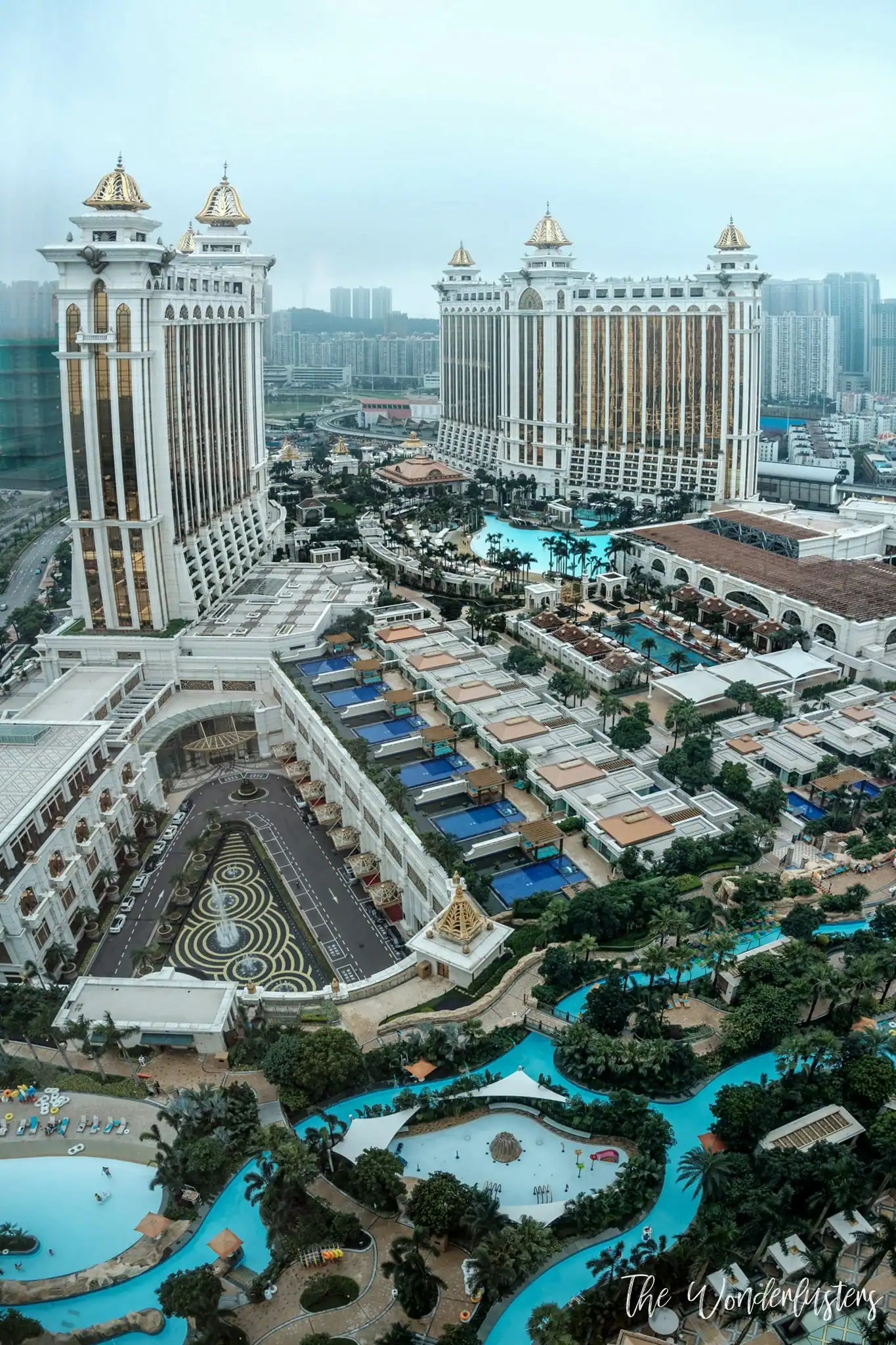
Since the start of our world tour, our points had already taken us to many 5-star Marriott hotels, such as the Ritz-Carlton Abu Dhabi Grand Canal, the JW Marriott Ankara and the Fiji Marriott Resort Momi Bay. But in Macau, the luxury was beyond anything we had imagined! First, our Marriott Gold status earned us an upgrade to one of the hotel’s finest units: a 100 m² executive suite on a corner of the top floor, with an exceptional view over the resort. The home automation was state of the art: motorized curtains, motorized toilet lids and built-in speakers in the bathroom. The outside of the windows was cleaned every day and treated with a rain repellent. Four times, staff brought us complimentary hors d’oeuvres, fruit and small gifts; the boys even got to choose their own. From our suite, we overlooked the guests-only water park, which sat on top of a shopping mall and the resort’s casino!
Getting Around Hong Kong and Macau
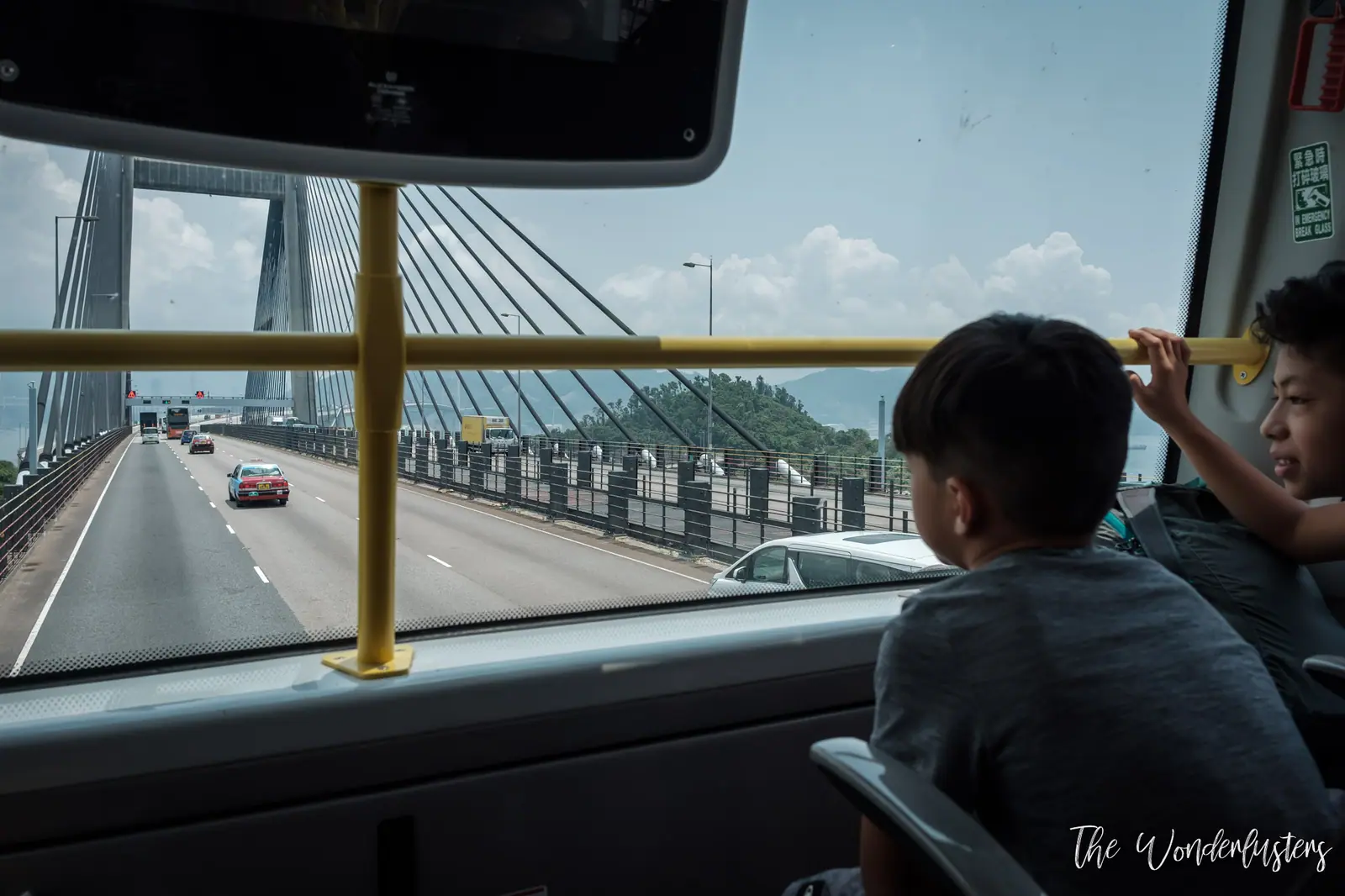
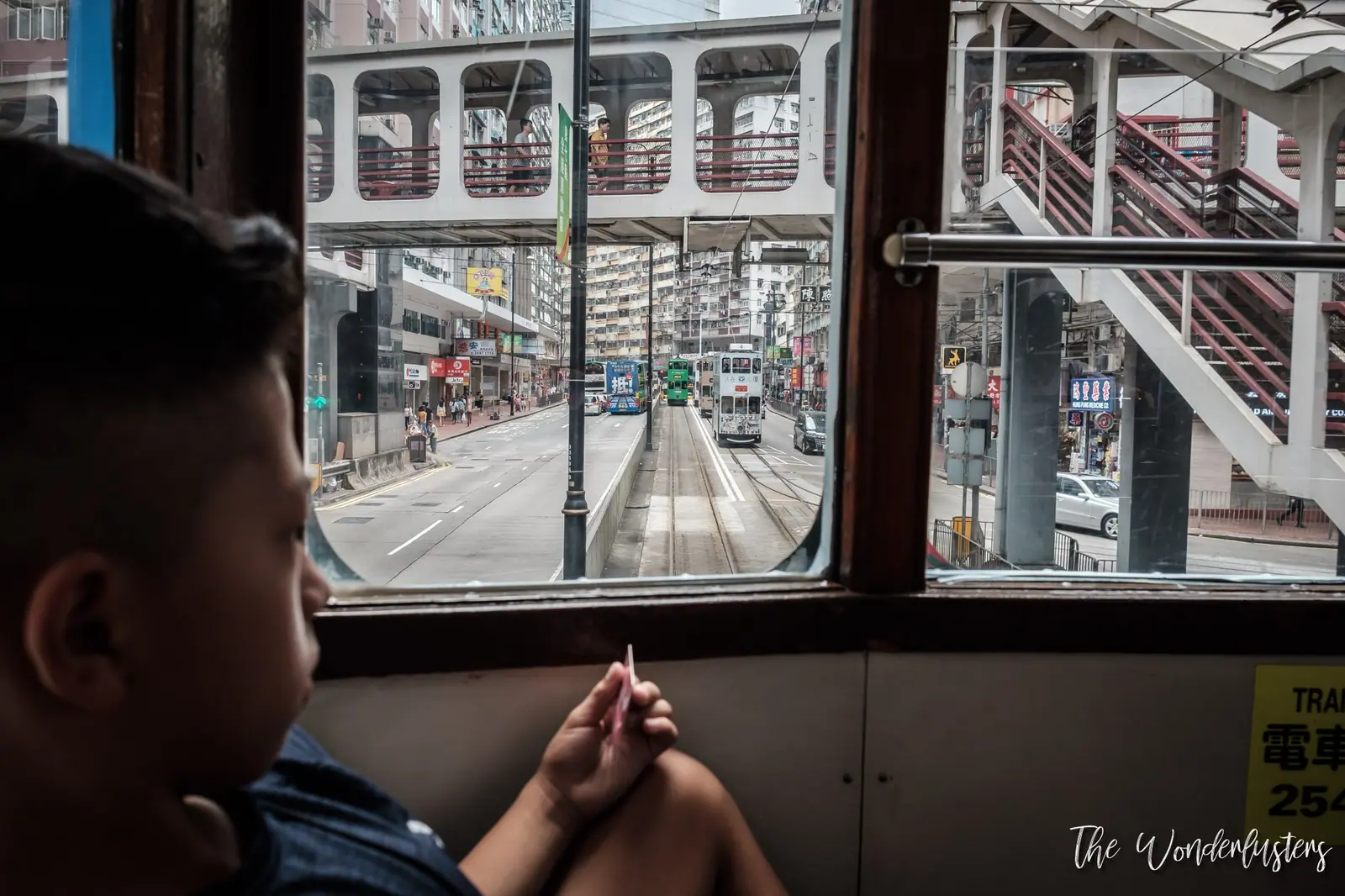
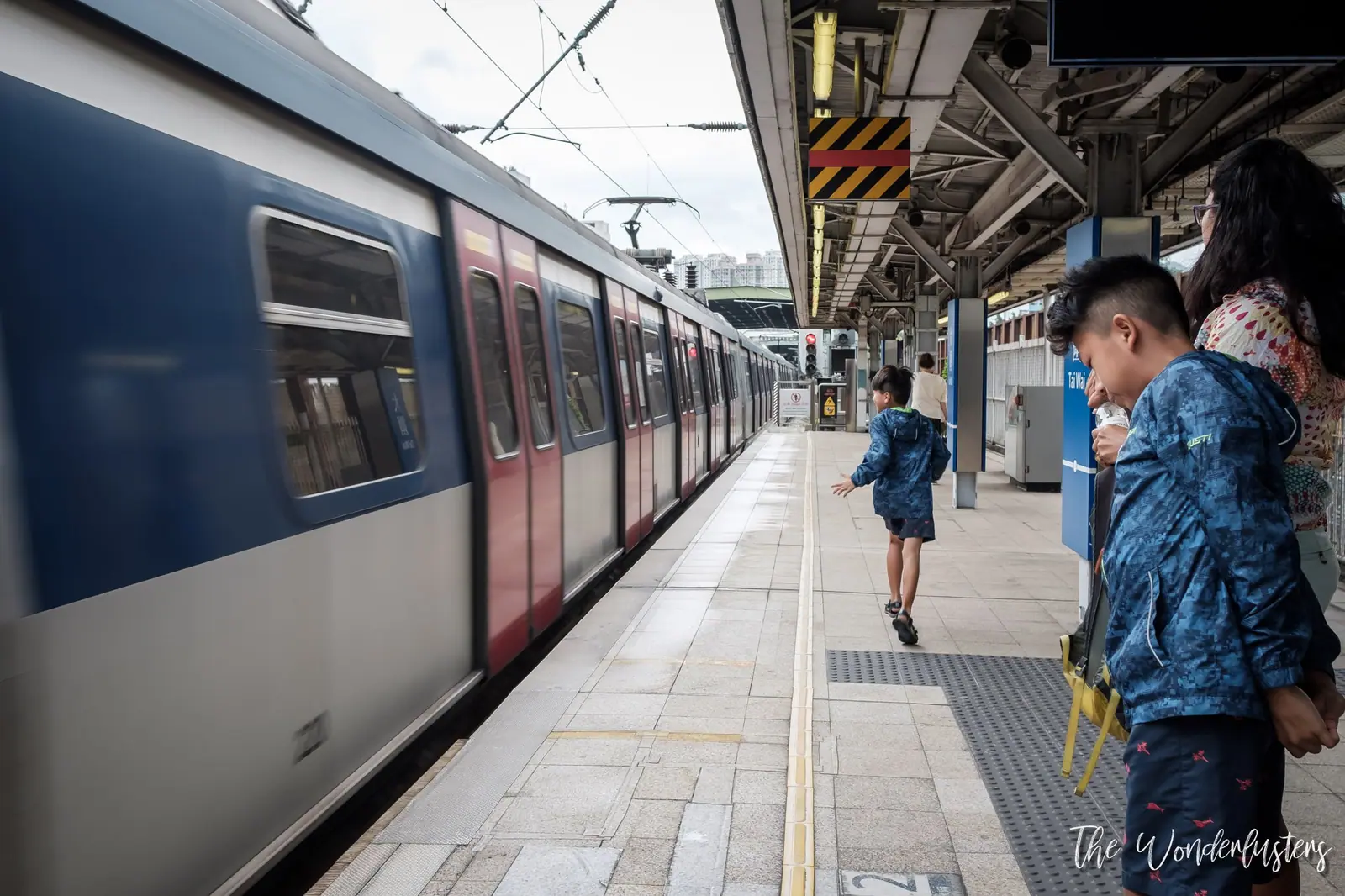
Hong Kong’s metro and bus networks are particularly well developed and very cheap. The ferry from Kowloon to Hong Kong Island is also efficient and inexpensive, with a magnificent 360-degree view of Victoria Harbour. On Hong Kong Island, we rode the century-old tram from east to west, through the skyscrapers.
In Macau, free hotel shuttles link the ports with the northern and southern parts of the territory, which is very convenient.
What to Eat in Hong Kong and Macau
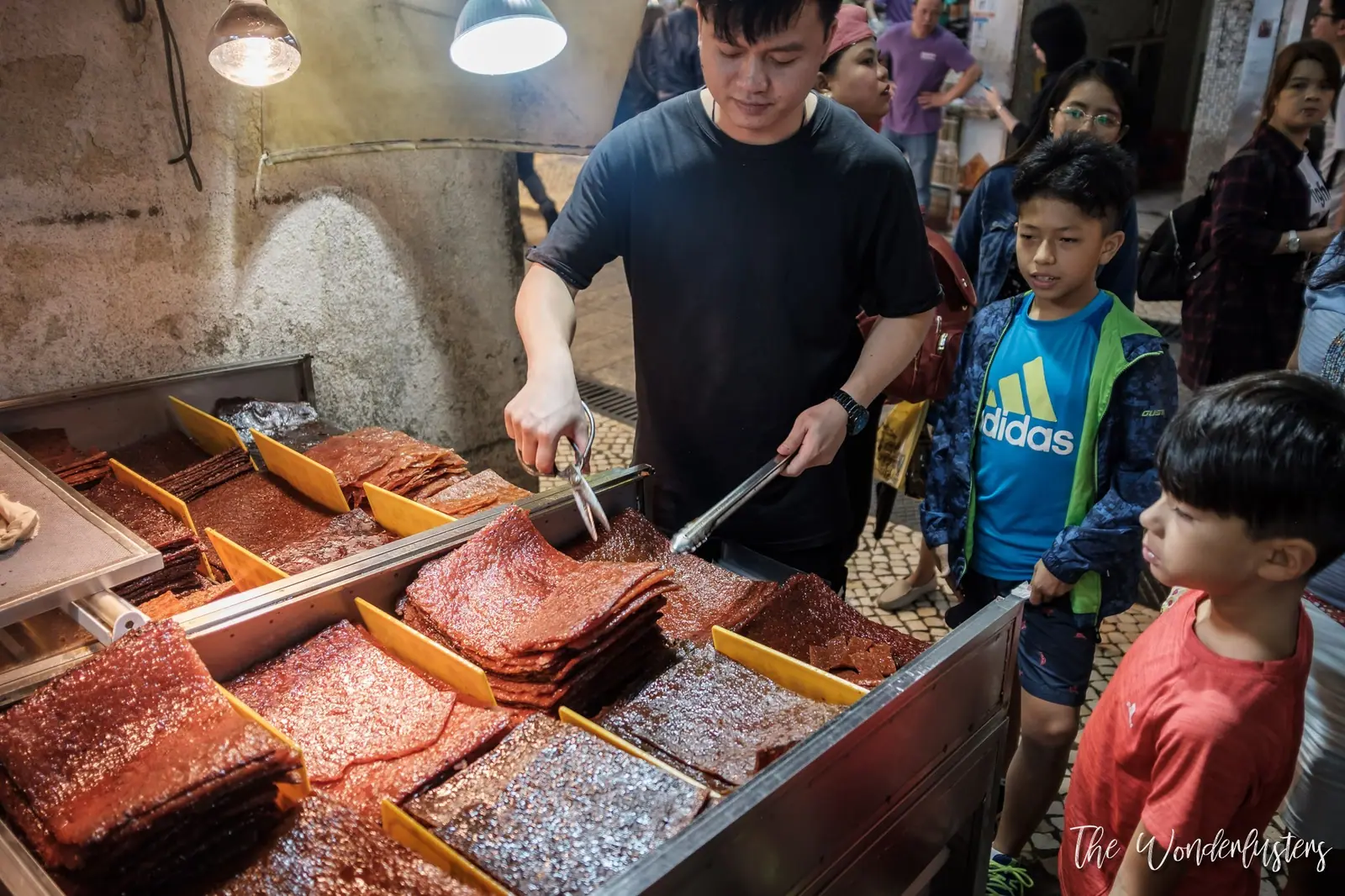
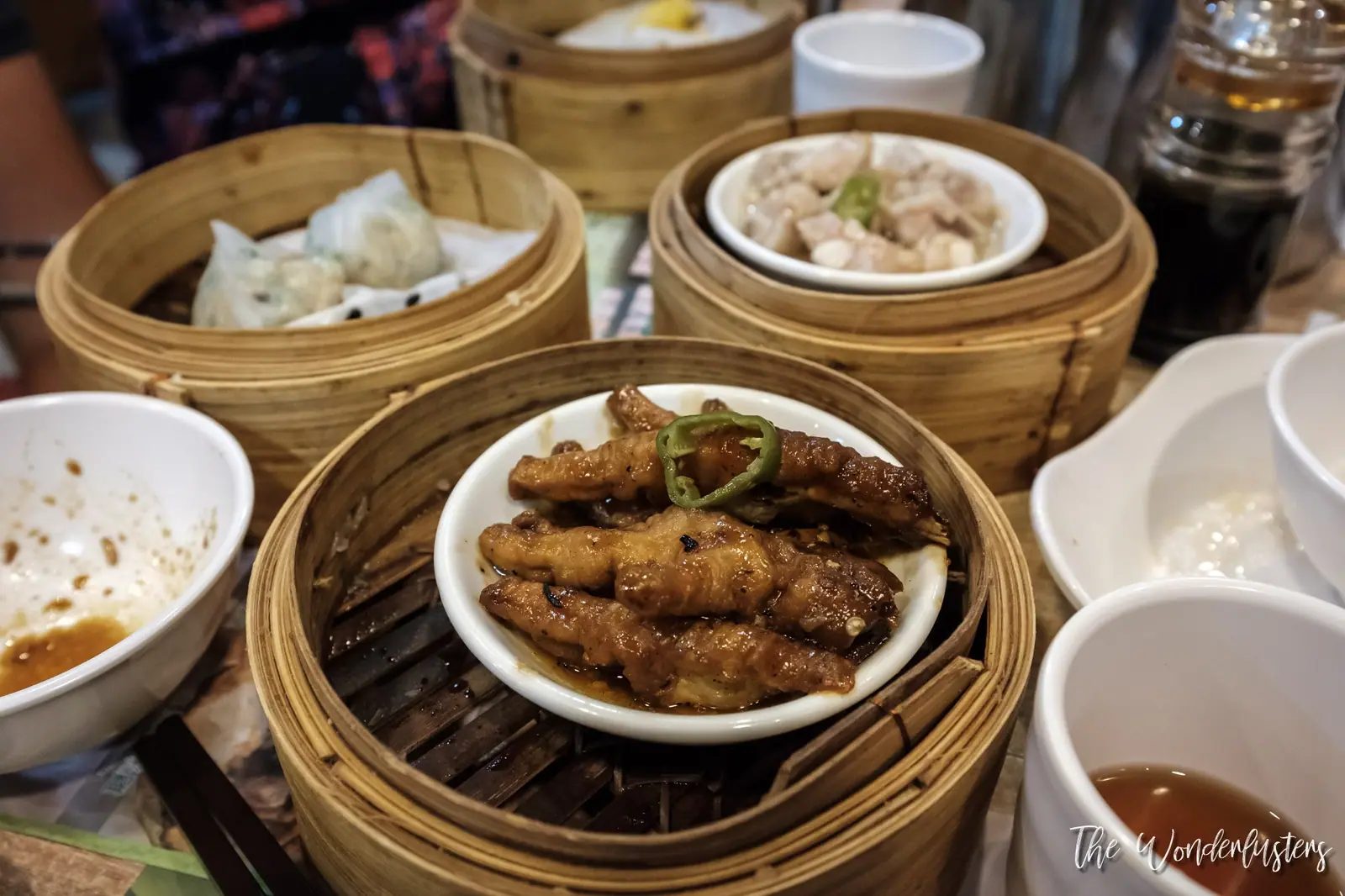
Needless to say, we feasted on Cantonese food, one of the most popular Chinese cuisines: dim sum, barbecue pork, roast duck, wontons and other noodle dishes… not to mention durian!
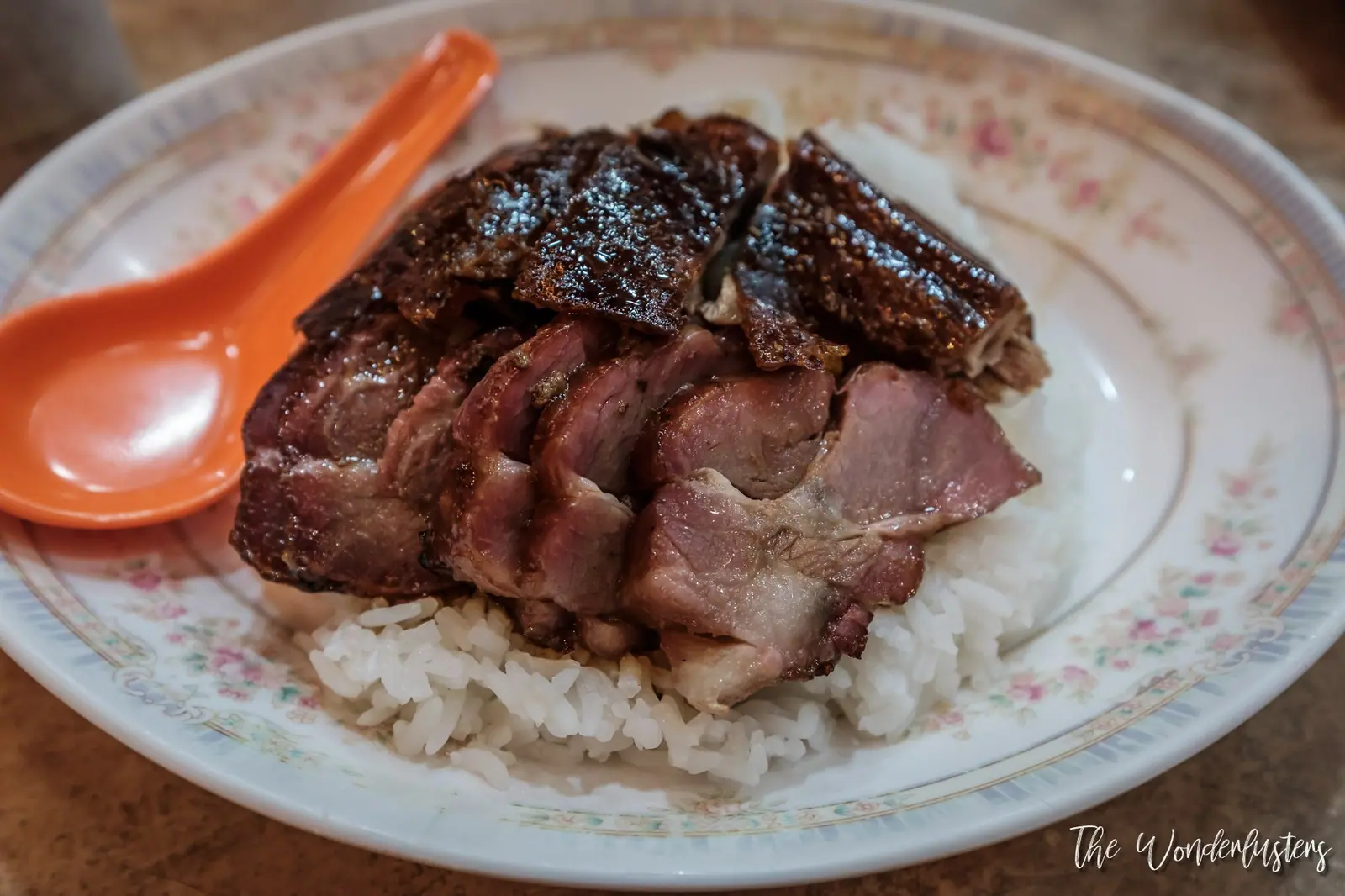
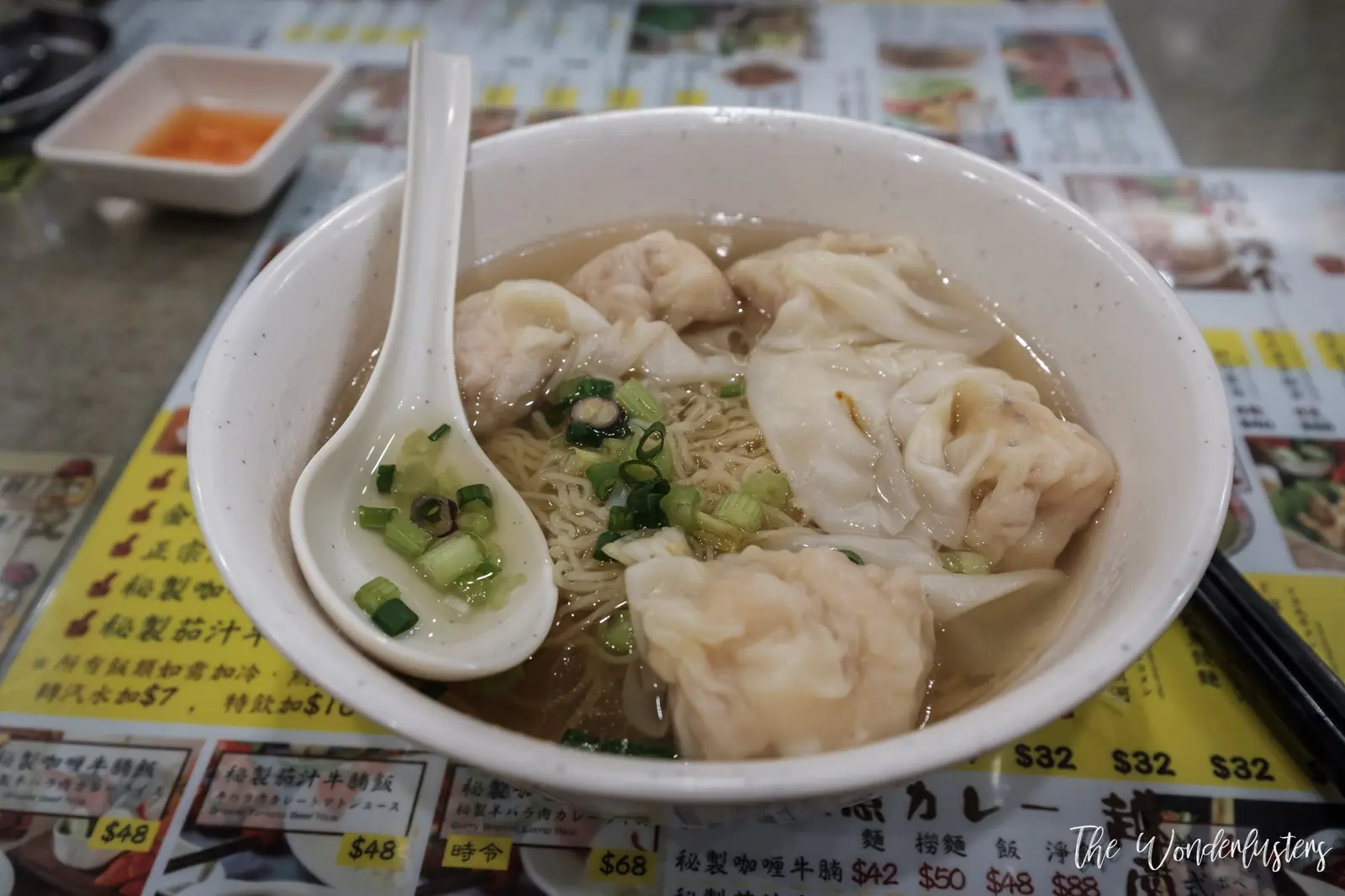
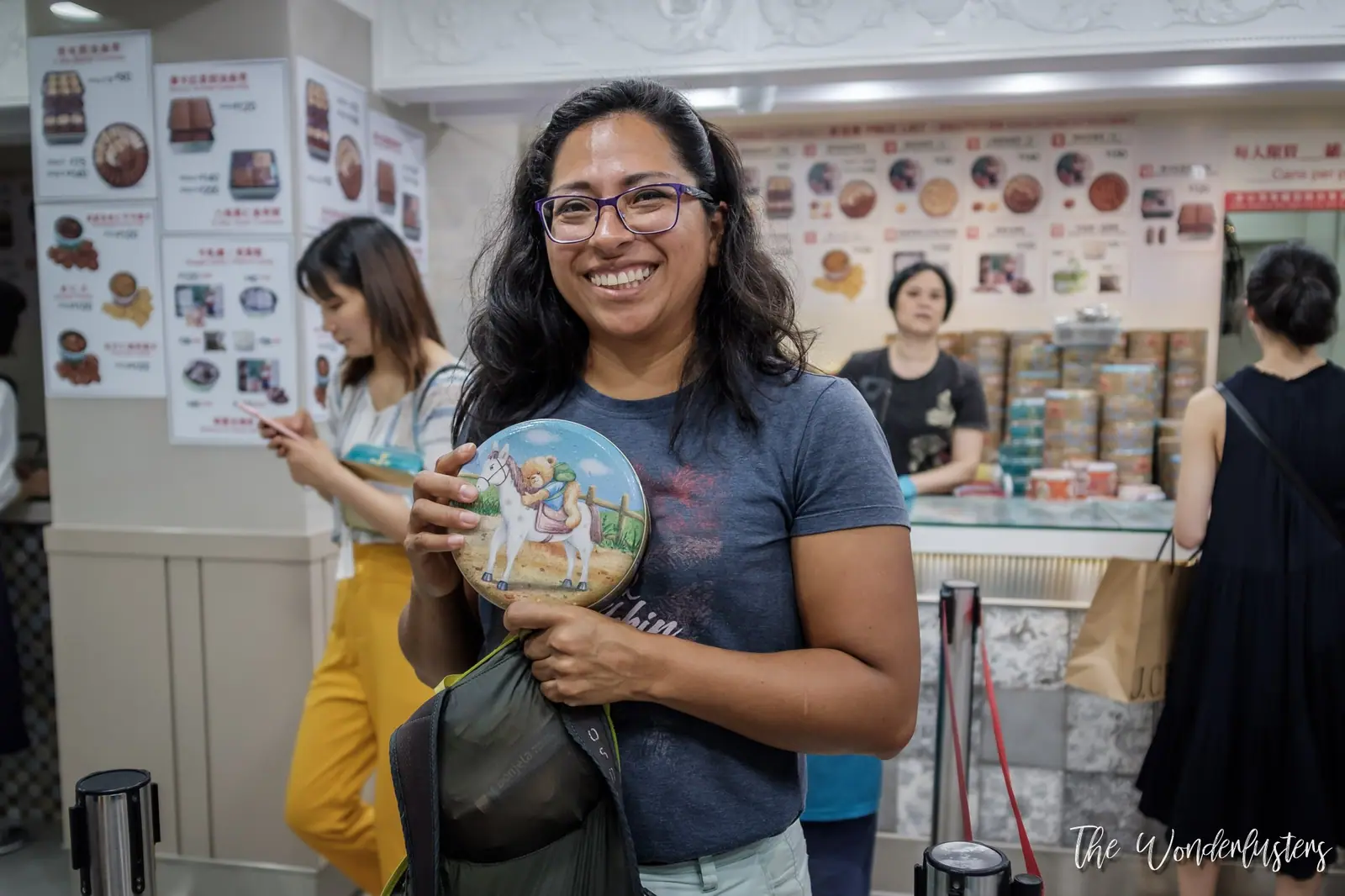
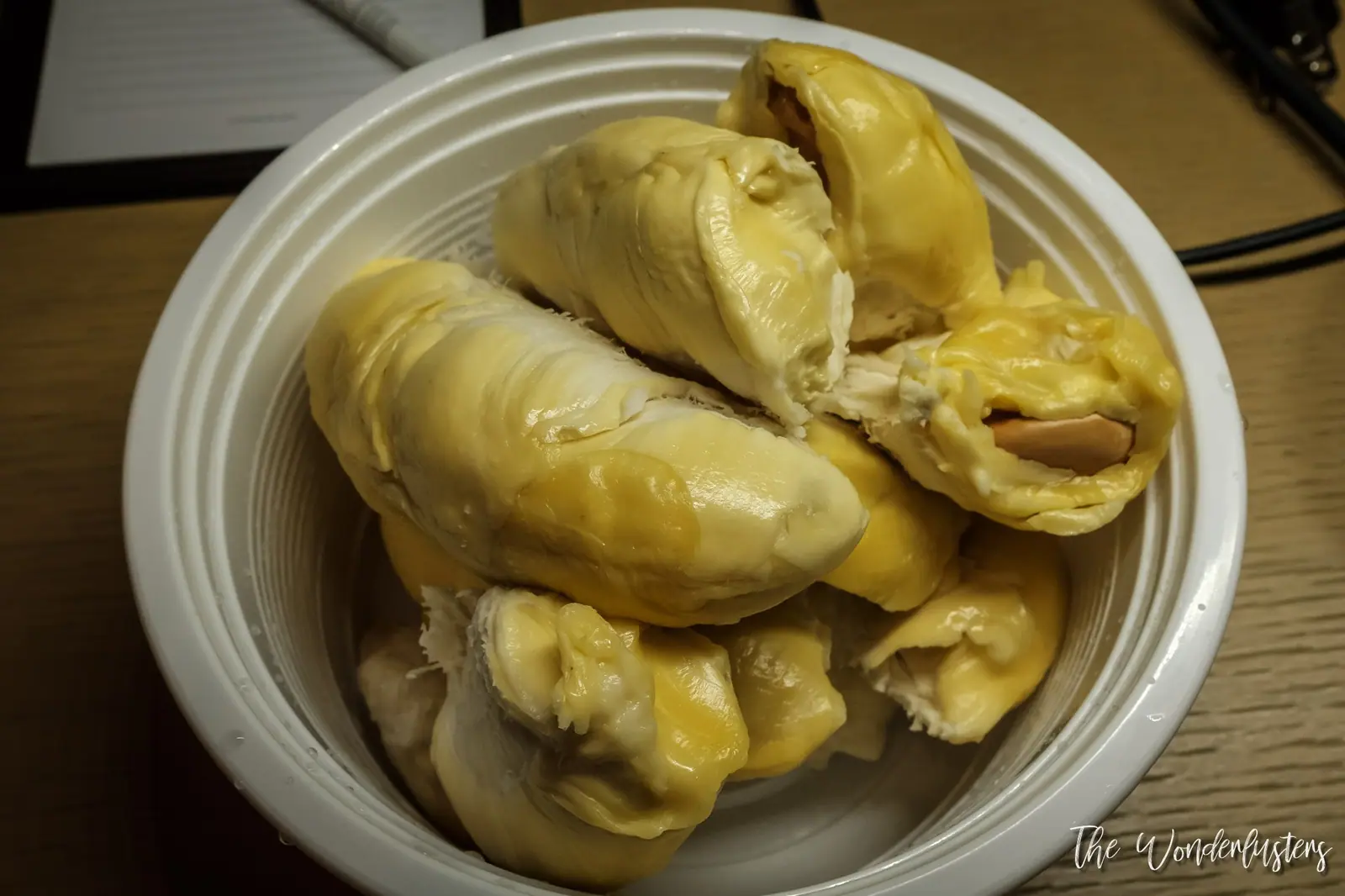
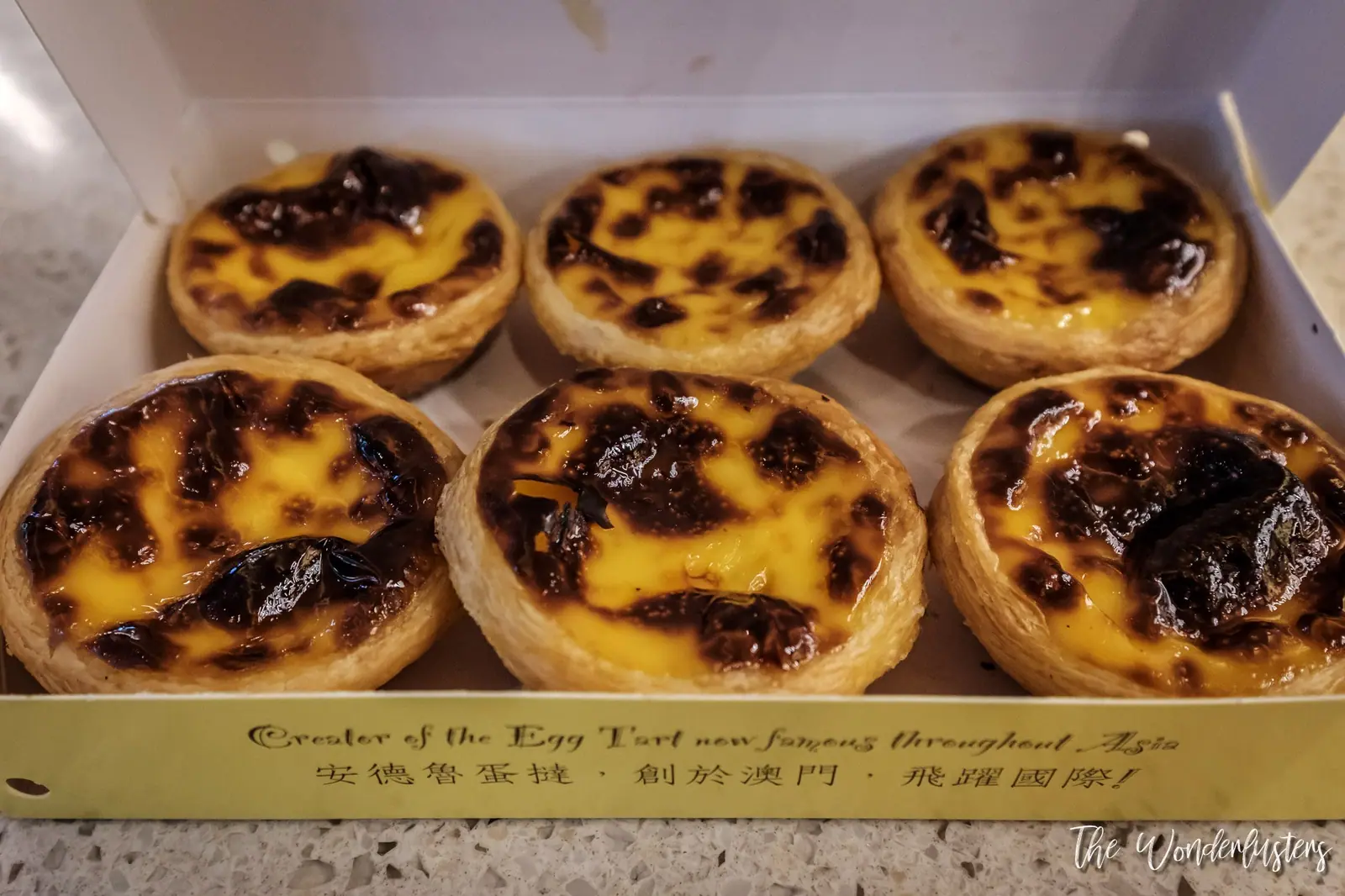
In Macau, egg tarts (pastéis de nata) are a popular specialty brought over from Portugal!
How Much Did 11 Days in Hong Kong and Macau Cost?
Since we slept in hotels using our points, we didn’t have to break the bank to visit Hong Kong and Macau. The Hong Kong dollar was accepted in Macau, so we didn’t need to change money. The amounts below include all our expenses in both Chinese special administrative regions. For our family of 4, the stay cost:
- 9,694.00 HKD (1,235.61 USD);
- 881.00 HKD (112.29 USD) per day;
- 220.00 HKD (28.04 USD) per person and per day.
Amounts were paid in Hong Kong dollars. US-dollar equivalents use the average exchange rate during our trip (April 26 – May 7, 2019): 1 USD = 7.85 HKD.
In detail:
| Expense Category | Amount Spent |
|---|---|
| Flight | 3,152.00 HKD / 401.76 USD |
| Accommodation | 1,348.00 HKD / 171.82 USD |
| Transport | 1,084.00 HKD / 138.17 USD |
| Eating out | 2,350.00 HKD / 299.53 USD |
| Groceries | 1,240.00 HKD / 158.05 USD |
| Activities | 520.00 HKD / 66.28 USD |
| Total | 9,694.00 HKD / 1,235.61 USD |
Conclusion
We loved returning to Hong Kong and discovering Macau. We reconnected with a certain nostalgia, but Hong Kong is no longer the city it was 10 years ago. We also discovered new sides of this extraordinary region, which now holds an even more special place in our hearts.
And now, on to Malaysia!
Questions travellers ask
How many days did you spend in Hong Kong and Macau?
We spent 11 days there, from April 26 to May 7, 2019: 9 days in Hong Kong and 2 days in Macau.
How much did 11 days in Hong Kong and Macau cost?
For our family of four, the stay cost 9,694 HKD (about 1,236 USD at 2019 rates), or 881 HKD per day and 220 HKD per person per day. Most of our hotel nights were paid with Marriott points.
How did you get from Hong Kong to Macau?
We crossed on the Hong Kong–Zhuhai–Macau Bridge, a 55 km chain of bridges and tunnels, with one border check in Hong Kong and another in Macau.
Can you use Hong Kong dollars in Macau?
During our visit, the Hong Kong dollar was accepted in Macau, so we didn't need to change money, even though Macau's own currency is the pataca.
Where did you stay in Hong Kong and Macau?
We spent 9 nights at the Courtyard by Marriott Hong Kong Sha Tin using points, then one night at the Rio Hotel & Casino in northern Macau and one at the JW Marriott Hotel Macau in Taipa.